Aluminum vs Steel vs Titanium for CNC Machined Parts
Choose aluminum when weight and corrosion resistance matter, steel when strength and cost matter, and titanium when strength-to-weight ratio is critical and budget allows. This guide compares specific alloys — 6061-T6, 7075-T6, 4140, 304 SS, 316L SS, and Ti-6Al-4V — with mechanical properties, machinability ratings, cost per pound, and cycle-time multipliers.
Material Selection Drives 40–60% of Total Part Cost
For CNC machined parts, the material you select determines raw stock price, cycle time, tool wear rate, and post-processing requirements. Choosing 6061-T6 aluminum over Ti-6Al-4V for a non-weight-critical bracket can reduce total part cost by 80–90%. This guide provides alloy-specific data — UTS, yield strength, density, machinability rating, cost per pound, and cycle-time multipliers — so you can make that decision with real numbers.
Quick Decision Framework
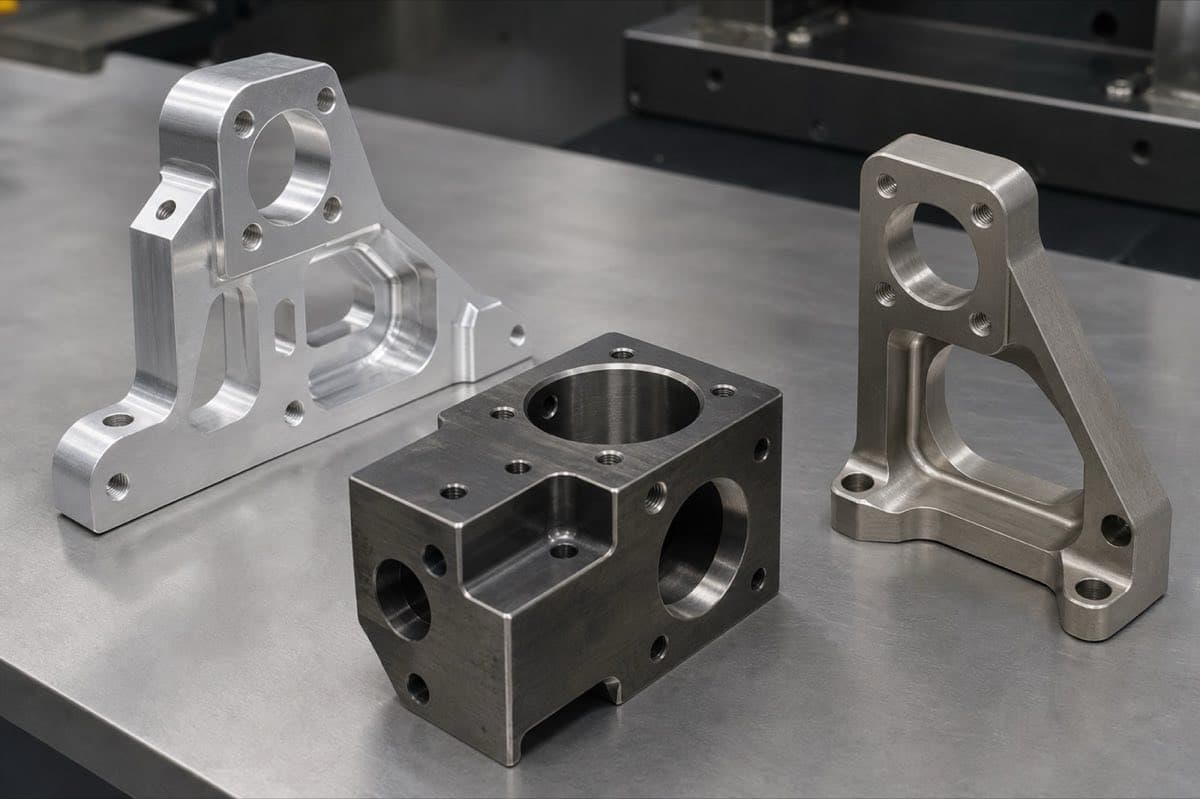
Every CNC material decision starts with one dominant constraint — weight, strength, cost, or corrosion environment — and that single priority narrows the field to one or two alloy families.
Weight-limited? Aluminum or titanium. Strength-limited? Steel or titanium. Cost-limited? Aluminum or carbon steel. Corrosion environment? Aluminum (anodized), stainless steel, or titanium. The table below maps each priority to the right alloy family and specific grade.
| Priority | Material Family | Top Alloy | Why |
|---|---|---|---|
| Lowest cost | Carbon steel | 12L14, 1018 | $1–2/lb ($2–4/kg) raw, machinability rating up to 170% |
| Lightweight | Aluminum | 6061-T6, 7075-T6 | 2.70–2.81 g/cm³ vs. 7.85 g/cm³ for steel |
| High strength | Alloy steel | 4140, 4340 | UTS 95–108 ksi (655–745 MPa) heat-treated |
| Corrosion + lightweight | Aluminum | 6061-T6 + anodize | Natural oxide layer + anodize Type II/III per MIL-A-8625 |
| Corrosion + strength | Stainless steel | 304, 316L | Cr-Ni passivation layer, no coating required |
| Strength-to-weight | Titanium | Ti-6Al-4V | Comparable strength to heat-treated alloy steels at 57% of the weight |
| Biocompatible | Titanium or 316L SS | Ti-6Al-4V ELI, 316L | ISO 10993 biocompatible |
Decision Tree: What Is Your Primary Constraint?
Weight
6061-T6 for general use (2.70 g/cm³), Ti-6Al-4V when strength must also be high (4.43 g/cm³)
Strength
4140 (95 ksi / 655 MPa) or 4340 (108 ksi / 745 MPa) for cost-effective strength; Ti-6Al-4V (130 ksi / 896 MPa) when weight is also a factor
Cost
12L14 steel at $1–2/lb ($2–4/kg) for small parts; 6061-T6 aluminum at $3–5/lb ($7–11/kg) for the shortest cycle times
Corrosion
6061-T6 + anodize for mild environments; 316L SS for chemical exposure; Ti for high-temp corrosion
Pro Tip
Most engineers over-specify material. Before selecting Ti-6Al-4V or 17-4 PH, ask: does this part actually need the higher strength, corrosion resistance, or temperature capability? In 70–80% of cases, 6061-T6 aluminum or 4140 steel meets the functional requirement at a fraction of the cost.
Aluminum Alloys for CNC Machining
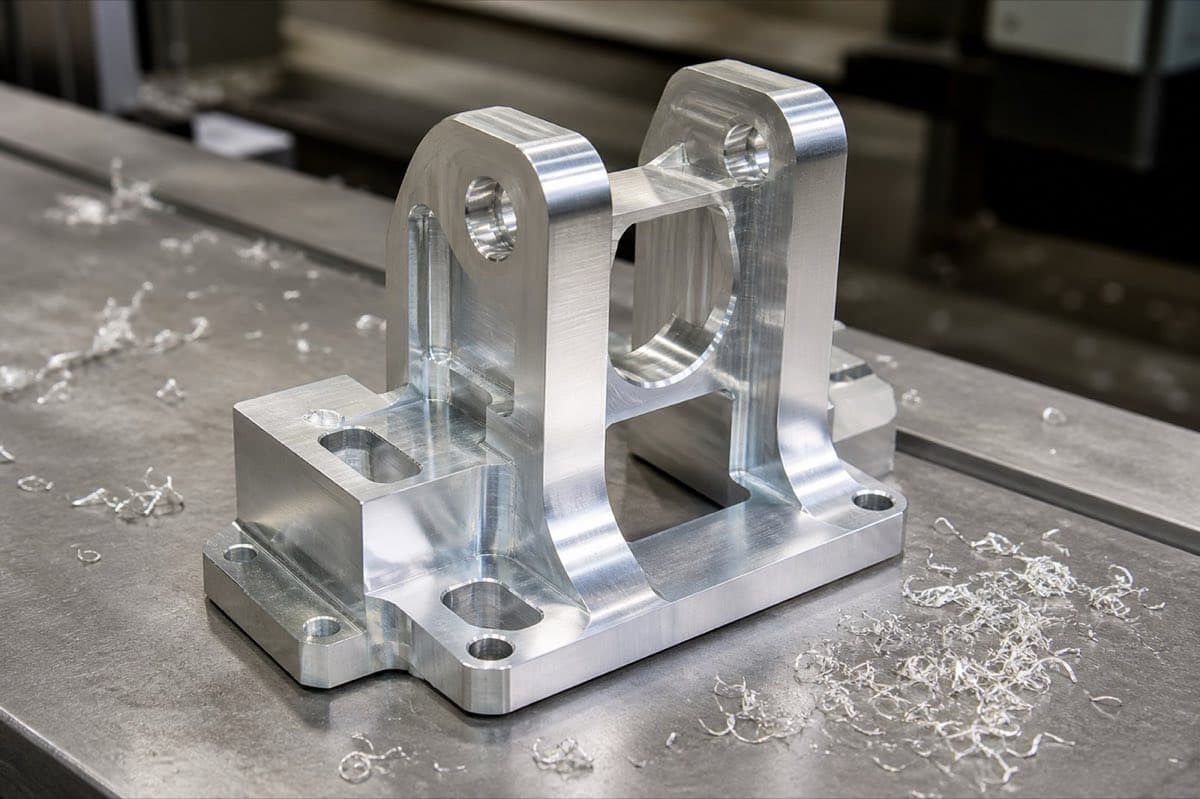
If you are new to CNC sourcing, start with aluminum — it is usually the easiest metal to iterate on because 6061-T6 combines high machinability with broad stock availability. Aluminum is the most frequently CNC-machined metal — typically 60–70% of job-shop volume. High machinability (90% for 6061-T6 relative to free-machining aluminum 2011-T3, rated 100%), low density (2.70 g/cm³), and natural corrosion resistance make it the default choice when strength requirements allow. The three workhorse alloys are 6061-T6, 7075-T6, and 2024-T3. For most prototype and low-volume jobs, aluminum CNC machining is the default starting point because 6061-T6 keeps cycle time, tool wear, and finishing cost under control.
| Property | 6061-T6 | 7075-T6 | 2024-T3 |
|---|---|---|---|
| UTS, ksi (MPa) | 45 (310) | 83 (572) | 70 (483) |
| Yield strength, ksi (MPa) | 40 (276) | 73 (503) | 50 (345) |
| Density, g/cm³ | 2.70 | 2.81 | 2.78 |
| Machinability rating | 90% | 70% | 70% |
| Cost, $/lb ($/kg) | $3–5 ($7–11) | $5–8 ($11–18) | $4–7 ($9–15) |
| Corrosion resistance | Good (anodizable) | Fair (needs anodize) | Poor (needs clad or anodize) |
| Weldability | Good (TIG/MIG) | Poor | Poor |
| Fatigue resistance | Moderate | Good | Excellent |
| Primary use | General structural, enclosures | High-load brackets, tooling | Fatigue-critical, cyclic-load parts |
Machinability rating relative to Al 2011-T3 = 100% (standard aluminum baseline). Mechanical properties per ASM Handbook Vol. 2.
Surface Finishing Options
- Anodize Type II per MIL-A-8625: decorative + corrosion protection, 0.0002–0.001 in. (0.005–0.025 mm; 5–25 μm) thickness
- Anodize Type III (hard) per MIL-A-8625: wear-resistant, 0.001–0.003 in. (0.025–0.075 mm; 25–75 μm), hardness up to 70 HRC equivalent
- Chromate conversion per MIL-DTL-5541: conductive corrosion protection for EMI shielding applications
CNC Machining Considerations
- High RPM spindle preferred: 10,000–20,000 RPM typical for standard VMC work; up to 30,000 RPM with HSM spindles for small endmills
- Aggressive feeds achievable: 0.004–0.010 in./tooth (0.10–0.25 mm/tooth) typical for 6061-T6
- Built-up edge (BUE) risk at low spindle speeds — maintain SFM above 800 (250 m/min) to prevent material welding to the tool
- Typical surface finish: Ra 0.8–1.6 μm achievable with standard end mills at proper speeds
Pro Tip
Default to 6061-T6 unless you have a specific reason not to. It is the most available aluminum alloy (nearly every metal supplier stocks it in bar, plate, and sheet), machines with the fewest issues, and anodizes well. Reserve 7075-T6 for applications where the 40% higher yield strength (73 ksi / 503 MPa vs. 40 ksi / 276 MPa) justifies the 60–100% higher material cost and reduced weldability.
Steel Alloys for CNC Machining
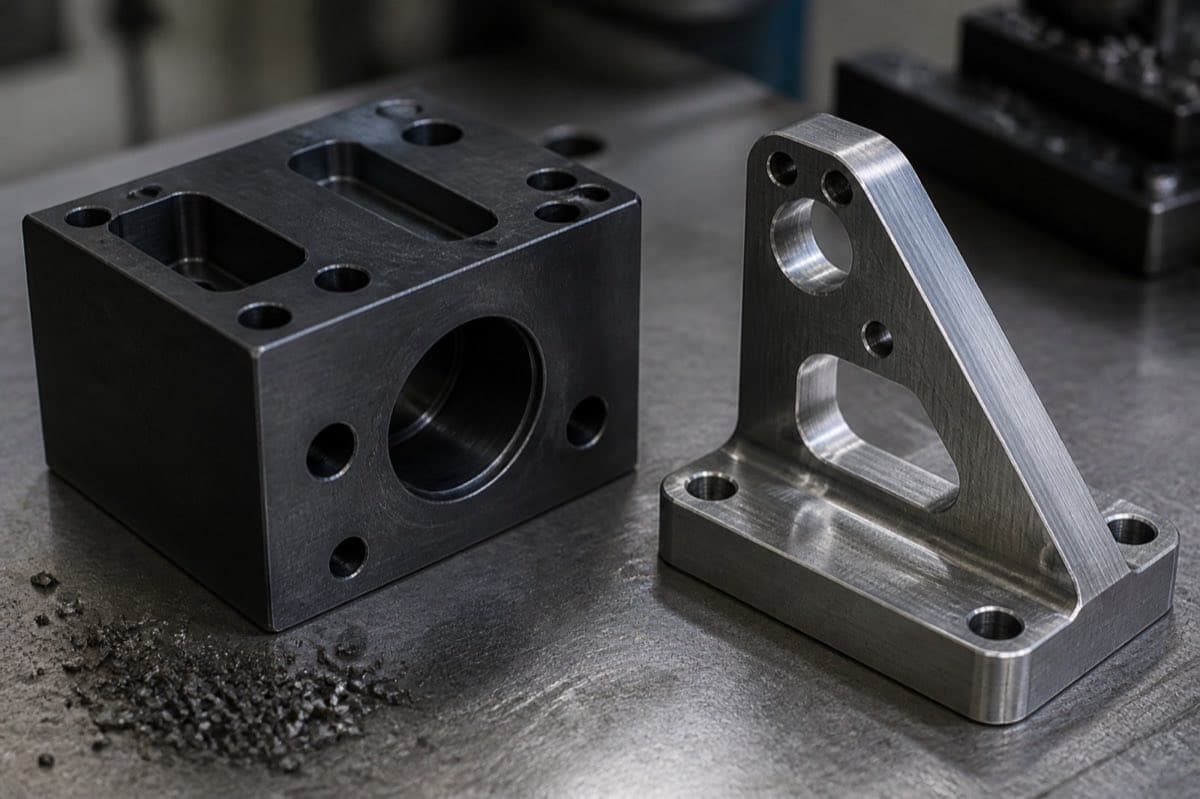
When your strength requirements exceed what aluminum can deliver (yield > 73 ksi / 503 MPa), steel is the next step — and choosing the right grade determines whether your part is machinable or a nightmare. Steel offers the broadest range of mechanical properties of any metal family — from 12L14 free-machining at 78 ksi (540 MPa) UTS to 17-4 PH precipitation-hardened at 135 ksi (930 MPa) in H1150 condition. The trade-off: higher density (7.85–8.00 g/cm³) and, for carbon steels, poor corrosion resistance without plating or coating.
| Property | 1018 | 12L14 | 4140 | 4340 | 304 SS | 316L SS | 17-4 PH |
|---|---|---|---|---|---|---|---|
| UTS, ksi (MPa) | 63.8 (440) | 78 (540) | 95 (655) | 108 (745) | 73–100 (505–690) | 75–87 (515–600) | 135 (930) |
| Yield, ksi (MPa) | 53.7 (370) | 60 (415) | 60 (415) | 68 (470) | 31 (215) | 25–42 (170–290) | 105 (725) |
| Machinability | 70% | 170% | 65% | 50% | 45% | 36% | 48% |
| Cost, $/lb ($/kg) | $1–2 ($2–4) | $1–2 ($2–4) | $1.50–3 ($3–7) | $2–4 ($4–9) | $3–5 ($7–11) | $4–7 ($9–15) | $6–10 ($13–22) |
| Corrosion | Poor | Poor | Poor | Poor | Excellent | Excellent | Good |
| Weldability | Good | Poor (leaded) | Good (preheat) | Fair (preheat) | Excellent | Excellent | Fair |
| Primary use | Low-cost structural, weldments | High-volume turned parts, pins | Gears, shafts, structural | High-toughness critical parts | Corrosion-resistant process equip. | Medical instruments, marine | High-strength pins, shafts |
17-4 PH properties shown for H1150 condition (over-aged for highest corrosion resistance among 17-4 PH conditions). 4140/4340 in annealed condition; heat-treated values are 20–40% higher.
Carbon & Alloy Steel CNC Notes
- Carbide tooling recommended for alloy steels (4140, 4340) — HSS wears 3–5× faster
- Typical SFM: 200–400 (60–120 m/min) for carbon steels; 100–250 (30–75 m/min) for alloy steels
- 12L14 contains lead for chip-breaking — produces short, clean chips at high feed rates. Not weldable
- Carbon steels require plating (zinc, nickel) or painting for corrosion protection in any humid environment
Stainless Steel CNC Notes
- 304 and 316L austenitic grades work-harden rapidly — avoid dwelling or rubbing without cutting
- Flood coolant is critical: stainless conducts heat poorly, causing tool-tip temperatures above 1,200°F (650°C)
- 316L offers higher pitting and crevice corrosion resistance vs. 304 (2.5% Mo content) — required for marine and chemical environments
- Passivation per ASTM A967 after machining restores the chromium oxide layer removed during cutting
Pro Tip
If you need both corrosion resistance and high strength, consider 17-4 PH stainless before jumping to titanium. In H1150 condition, 17-4 PH reaches 135 ksi (930 MPa) UTS with good corrosion resistance — at $6–10/lb ($13–22/kg) vs. $15–30/lb ($33–66/kg) for Ti-6Al-4V. The machining cycle time is also roughly 2× faster than titanium.
Titanium Alloys for CNC Machining
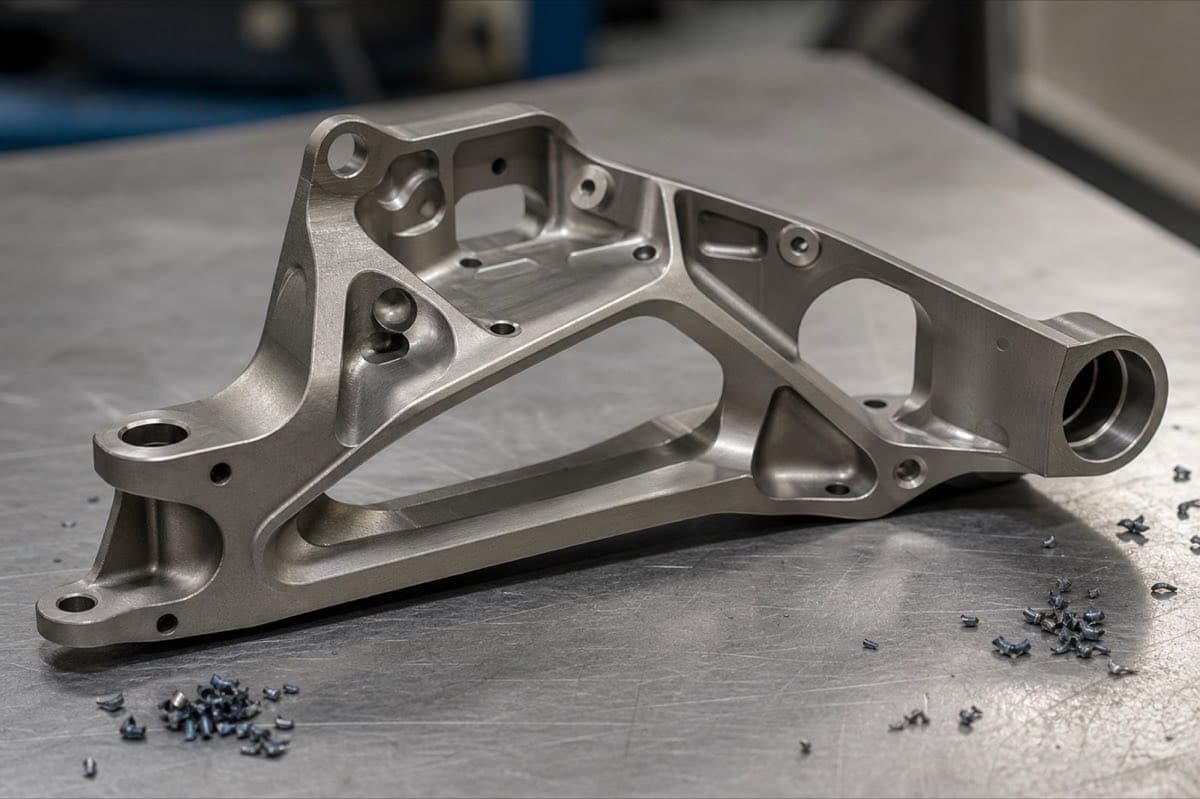
Titanium is justified only when no other metal can meet the combined requirements for strength, weight, and corrosion resistance — and that justification must account for 5–8× longer machining cycles and 10–30× higher raw material cost vs. aluminum. Ti-6Al-4V achieves 130 ksi (896 MPa) UTS at 4.43 g/cm³, roughly 57% of steel's weight. Raw material costs $15–30/lb ($33–66/kg), and cycle times run 5–8× longer than aluminum. Why? Titanium's thermal conductivity is extremely low — 6.7 W/m·K vs. 167 W/m·K for 6061-T6 aluminum. This means cutting heat cannot dissipate through the workpiece and concentrates at the tool tip, accelerating wear. Combined with titanium's low elastic modulus (114 GPa, roughly half of steel's 200 GPa), the material springs back after the cutter passes, causing chatter, poor surface finish, and unpredictable tolerances unless feeds, speeds, and workholding are dialed in precisely.
| Property | Ti-6Al-4V (Grade 5) | CP Grade 2 |
|---|---|---|
| UTS, ksi (MPa) | 130 (896) | 50 (345) |
| Yield strength, ksi (MPa) | 120 (828) | 40 (275) |
| Density, g/cm³ | 4.43 | 4.51 |
| Machinability rating | 22% | 30% |
| Cost, $/lb ($/kg) | $15–30 ($33–66) | $10–18 ($22–40) |
| Cycle time vs. aluminum | 5–8× | 3–5× |
| Corrosion resistance | Excellent (all environments) | Excellent |
| Biocompatibility | Yes (ELI grade for implants) | Yes (per ISO 10993) |
| Max service temp | 600°F (315°C) | 500°F (260°C) |
Ti-6Al-4V per AMS 4928 (bars), AMS 4911 (sheet). CP Grade 2 per ASTM B348. ELI = Extra Low Interstitials, required for implant applications.
CNC Machining Considerations
- Low thermal conductivity: heat concentrates at the tool tip — flood coolant is mandatory, not optional
- Typical cutting speeds: 100–200 SFM (30–60 m/min) vs. 800–1,200 SFM (250–370 m/min) for aluminum
- Low elastic modulus (16 Msi / 110 GPa) causes spring-back — use sharp tools and maintain positive rake angles
- Titanium is reactive with most tool coatings at high temps — uncoated carbide or AlTiN-coated inserts are typical
When Titanium Is Worth the Cost
- Medical implants: Ti-6Al-4V ELI is the standard for load-bearing implants requiring osseointegration
- High-temperature applications: service above 400°F (200°C) where aluminum loses temper and steel is too heavy
- Aggressive corrosion environments: salt water, chloride solutions, or acidic environments where even 316L SS pits
- Weight-critical + high-load: when both strength above 83 ksi (572 MPa) and density below 5 g/cm³ are required simultaneously
Cost Reality Check
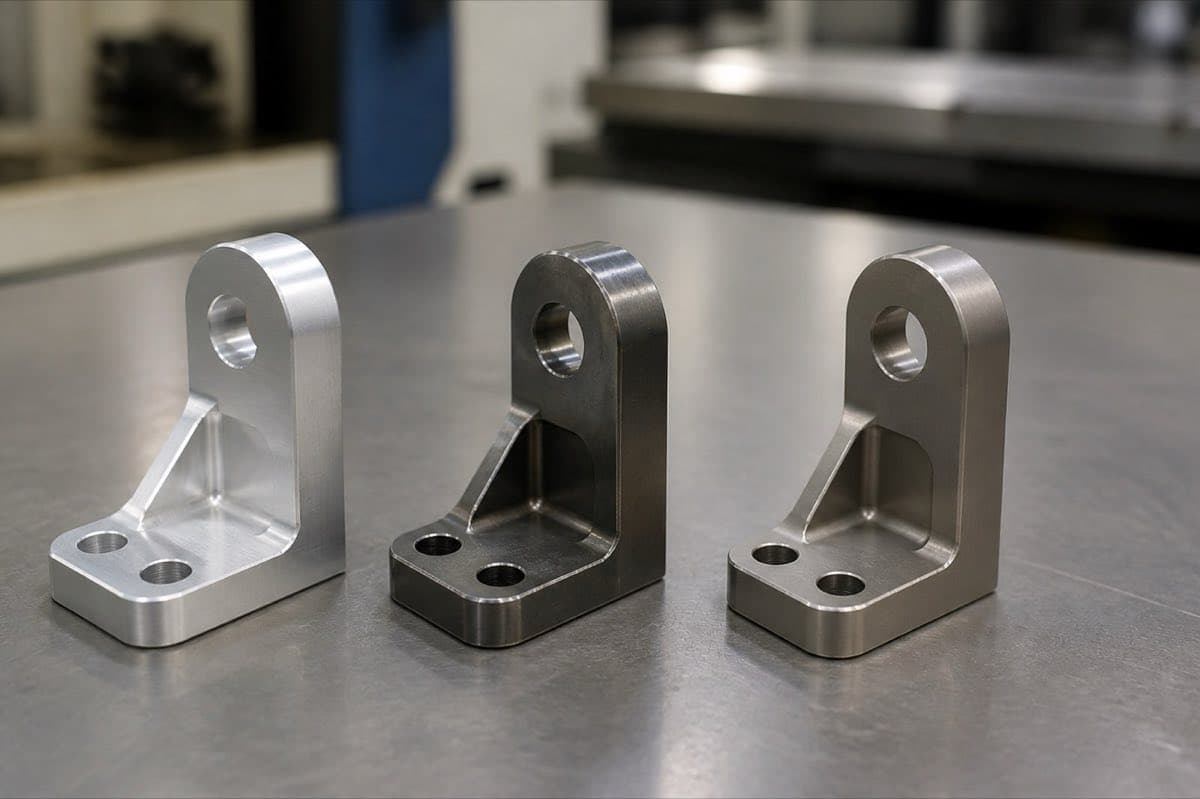
A simple bracket that costs $40–80 in 6061-T6 aluminum (at quantity 10) will typically cost $300–600+ in Ti-6Al-4V at the same quantity — roughly 5–8× more when combining material cost ($15–30/lb / $33–66/kg vs. $3–5/lb / $7–11/kg) and cycle time (5–8× longer). Verify that the application truly demands titanium's properties before specifying it.
Head-to-Head Comparison Table
This table gives you every number you need to make a material trade-off decision — print it and keep it next to your workstation. All six alloys, nine properties, side by side. Use real data instead of rules of thumb.
| Property | 6061-T6 Al | 7075-T6 Al | 4140 Steel | 304 SS | 316L SS | Ti-6Al-4V |
|---|---|---|---|---|---|---|
| UTS, ksi (MPa) | 45 (310) | 83 (572) | 95 (655) | 73–100 (505–690) | 75–87 (515–600) | 130 (896) |
| Yield, ksi (MPa) | 40 (276) | 73 (503) | 60 (415) | 31 (215) | 25–42 (170–290) | 120 (828) |
| Density, g/cm³ | 2.70 | 2.81 | 7.85 | 8.00 | 8.00 | 4.43 |
| Strength-to-weight (UTS/ρ) | 16.7 | 29.5 | 12.1 | 9.1 | 8.8 | 29.3 |
| Machinability | 90% | 70% | 65% | 45% | 36% | 22% |
| Cost, $/lb ($/kg) | $3–5 ($7–11) | $5–8 ($11–18) | $1.50–3 ($3–7) | $3–5 ($7–11) | $4–7 ($9–15) | $15–30 ($33–66) |
| Cycle time factor | 1.0× | 1.3× | 1.5× | 2.2× | 2.8× | 5–8× |
| Corrosion resistance | Good (anodized) | Fair | Poor (needs plating) | Excellent | Excellent | Excellent |
| Max service temp | 300°F (150°C) continuous | 250°F (121°C) | 800°F (427°C) | 1,500°F (816°C) | 1,500°F (816°C) | 600°F (315°C) |
Strength-to-weight = UTS (ksi) ÷ density (g/cm³). Cycle time factor relative to 6061-T6 aluminum = 1.0×. Machinability ratings use material-family baselines: aluminum alloys relative to 2011-T3 (100%), steels and titanium relative to AISI B1112 (100%). All properties at room temperature per ASM Handbook.
Key Takeaways from the Comparison
Strength-to-Weight Champion
7075-T6 aluminum (29.5) and Ti-6Al-4V (29.3) are virtually tied for strength-to-weight ratio — both roughly 2.4× that of 4140 steel (12.1). If weight is the primary driver and you don't need titanium's corrosion or temperature capability, 7075-T6 is the cost-effective alternative.
Cost-Performance Leader
4140 steel delivers the most strength per dollar: 95 ksi (655 MPa) UTS at $1.50–3/lb ($3–7/kg). For applications where weight and corrosion are not concerns, 4140 outperforms every other alloy on cost-normalized strength.
Machinability Spread
The machinability gap is massive — 6061-T6 at 90% vs. Ti-6Al-4V at 22%. That 4× difference translates directly to cycle time: a part that takes 15 minutes in aluminum takes 75–120 minutes in titanium. Factor this into your total part cost calculation, not just raw material price.
Pro Tip
Do not select material based on UTS alone. For deflection-limited designs (brackets, frames, housings), elastic modulus matters more than strength. Steel (29 Msi / 200 GPa) is 3× stiffer than aluminum (10 Msi / 69 GPa) — a steel bracket deflects one-third as much as an identically-shaped aluminum bracket under the same load.
147+ Metals and Plastics, One Platform
MakerStage machines all the alloys in this guide — plus 147+ other metals and plastics — across CNC machining, 3D printing, and sheet metal fabrication. Upload your CAD file with material specs and get a quote review that helps you compare the practical tradeoffs before you lock the material choice.
Upload CAD File for Quote ReviewApplication Selection by Industry
Your industry determines which material properties dominate the selection — biocompatibility for medical, weight savings for EV, and corrosion resistance for renewable energy all lead to different answers.Below are alloy recommendations for the most common CNC-machined components in each industry.
Robotics
Low weight, good stiffness-to-weight
40% higher yield than 6061
Hardened to 28–32 HRC for wear
135 ksi (930 MPa) UTS (H1150), corrosion-safe
Medical Devices
Biocompatible, autoclavable
ISO 10993, osseointegration
Lightweight, lower cost
Corrosion-safe for cleanroom
Semiconductors
Non-magnetic, lightweight, anodizable
Corrosion-resistant in chemical vapor
High thermal conductivity (96 BTU/hr·ft·°F)
Electropolished, ultra-clean surfaces
EV / Automotive
Lightweight, thermal dissipation
High fatigue strength, heat-treatable
Non-magnetic, good machinability
High strength-to-weight for unsprung mass
Renewable Energy
Corrosion-resistant, anodizable
Salt-spray corrosion resistance
EMI shielding with chromate conversion
Outdoor durability without coatings
Pro Tip
When in doubt, start with 6061-T6 aluminum for prototypes. It keeps cycle time predictable, stock availability broad, and finishing options straightforward. Validate your design with aluminum prototypes first, then switch to steel or titanium for production only if functional testing proves aluminum is insufficient.
Further Reading
- Aluminum vs steel for CNC machined parts — detailed two-material comparison with cost modeling.
- RFQ checklist for CNC machined parts — the material, drawing, tolerance, and finish details to include for faster review.
- 6061-T6 vs 7075-T6 aluminum — head-to-head comparison for CNC applications.
- Steel grades guide for CNC machining — 1018, 4140, 4340, 12L14, and stainless alloys compared.
- 304 vs 316L stainless steel — corrosion performance, cost, and application differences.
- CNC machining services at MakerStage — 3-axis and 5-axis milling, turning, and multi-axis capabilities.
Frequently Asked Questions
Related Resources
Review Your Material Choice
Upload your CAD file with your material specification. MakerStage provides a quote review with material optimization feedback so you can compare aluminum, steel, and titanium with your actual geometry. No minimum order quantity.
Review Material Quote