Aluminum vs Steel: How to Choose for Your Application
Weight, stiffness, strength, corrosion resistance, machinability, and cost — every dimension compared with a decision framework engineers actually use.
The Answer Is Almost Always Aluminum — Until It Isn't
Aluminum 6061-T6 is the correct default for the vast majority of CNC machined parts: structural brackets, housings, fixtures, enclosures, and prototypes. It is lighter, cheaper to machine, easier to surface-finish, and inherently corrosion-resistant. Steel earns its place when yield strength requirements exceed 73 ksi (503 MPa), operating temperature exceeds 302°F (150°C), or the application demands hardened and ground surfaces. This guide gives you the complete data set to make the call correctly.
Full Property Comparison Table
These numbers are the engineering basis for every aluminum-vs-steel decision — memorize the density and yield ratios, and you can estimate whether steel is justified before running FEA. Representative grades: Al 6061-T6 (aluminum default), AISI 1018 CD (mild steel default), and AISI 4140 PH (alloy steel when higher strength is needed).
| Property | Al 6061-T6 | Steel 1018 CD | Steel 4140 PH | Notes |
|---|---|---|---|---|
| Density | 2.70 g/cm³ | 7.87 g/cm³ | 7.85 g/cm³ | Al is ~3× lighter per unit volume |
| Yield Strength | 276 MPa (40 ksi) | 370 MPa (54 ksi) | 896 MPa (130 ksi (896 MPa)) | 4140 PH has 3× the yield of 6061 |
| Ultimate Tensile Strength | 310 MPa (45 ksi) | 440 MPa (64 ksi) | 1,020 MPa (148 ksi (1020 MPa)) | 4140 is a common choice for high-strength machined steel parts |
| Specific Strength (UTS/ρ) | 115 kN·m/kg | 56 kN·m/kg | 130 kN·m/kg | Al 6061 has 2× better specific strength than 1018 mild steel |
| Young's Modulus (Stiffness) | 68.9 GPa (10 Msi) | 200 GPa (29 Msi) | 200 GPa (29 Msi (200 GPa)) | Steel is 3× stiffer. For deflection-limited designs, geometry change (not alloy) is the solution for aluminum |
| Hardness | HB 95 | HRB 71 | HRC 28–32 | Steel can be hardened and ground; aluminum cannot exceed ~HB 150 (7075) |
| Corrosion Resistance (bare) | Good (natural oxide) | Poor (rusts rapidly) | Poor (requires plating or coating) | Aluminum wins on bare corrosion resistance; stainless steel wins in chloride environments |
| Thermal Conductivity | 167 W/m·K | 51 W/m·K | 42 W/m·K | Aluminum is 3× better conductor — preferred for heat sinks and thermal management |
| Max Service Temp | ~150°C (302°F) | ~400°C (750°F) | ~400°C (750°F) | Above 302°F (150°C), aluminum alloys begin to soften and lose temper |
| Machinability | Excellent (3–5× faster vs steel) | Good | Moderate (pre-hardened) | Aluminum is the easiest engineering metal to CNC machine |
| Weldability | Good (6061) | Excellent | Requires preheat | Steel welding is generally more forgiving than aluminum |
| Raw Material Cost | $3–5/lb ($6.6–11/kg) | $0.40–0.70/lb ($0.9–1.5/kg) | $0.90–1.40/lb ($2–3.1/kg) | Steel is cheaper per pound; aluminum wins on total part cost due to lower machining cost |
Values are typical for the named condition (T6, CD, PH). Actual properties vary by supplier heat/lot; always verify against the mill cert for your specific material.
Weight, Stiffness & Specific Strength
Understanding the difference between absolute strength, specific strength, and stiffness is what separates a good material choice from one that adds unnecessary weight and cost. Specific strength is the yield strength divided by density (units: kN·m/kg) — it tells you how strong a material is per unit of mass. Young's modulus (stiffness, units: GPa) tells you how much a material deflects under load, independent of strength. Aluminum 6061 (E = 68.9 GPa) is roughly 3× less stiff than steel (E = 200 GPa), but 3× lighter — so for the same-weight beam, they deflect approximately the same amount.
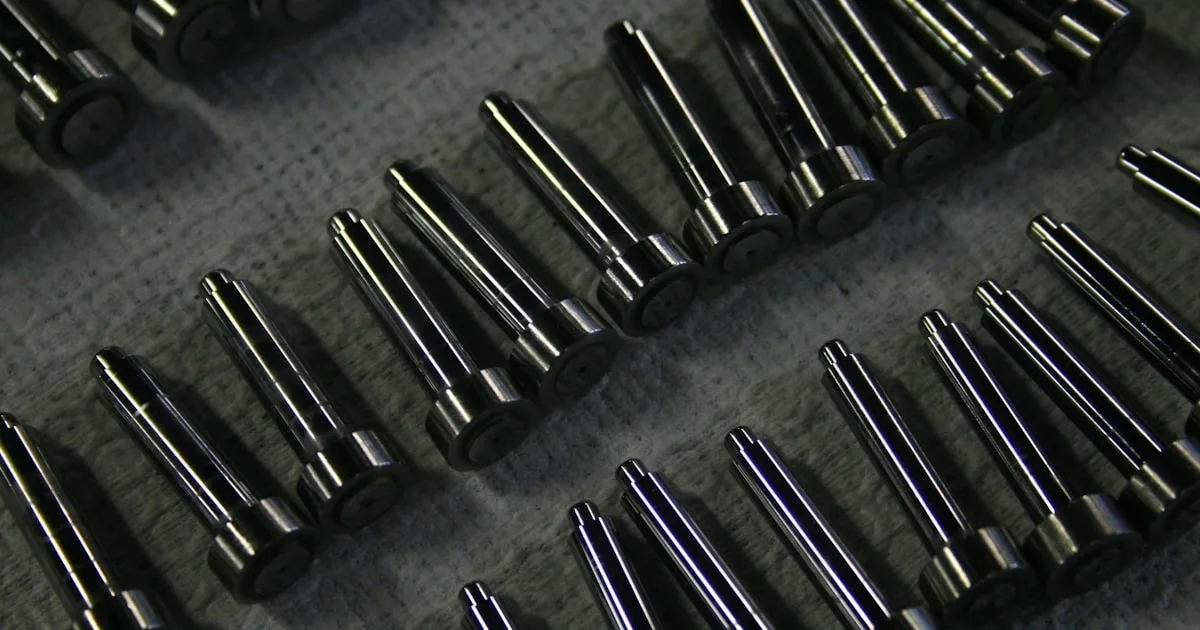
Aluminum 6061 (2.70 g/cm³) is 2.9× less dense than carbon steel (7.85 g/cm³). A part made from the same geometry in aluminum weighs roughly 1/3 of the steel equivalent. For mobile systems — robotic arms, drone structures, handheld tools — this directly translates to performance. For stationary structures, weight savings matter less.
Steel is 3× stiffer than aluminum (E = 200 GPa vs 69 GPa). A 6061 beam deflects 3× more than an identical 1018 steel beam under the same load. However, since aluminum is 3× less dense, you can use 3× more material for the same weight — and a deeper, wider cross-section deflects far less. The correct response to "aluminum deflects too much" is geometry change, not alloy change.
Specific strength (UTS ÷ density) measures how much strength you get per unit weight. Al 6061-T6 specific strength is 115 kN·m/kg vs 56 kN·m/kg for 1018 steel — aluminum is 2× stronger per pound. 7075-T6 (204 kN·m/kg) is the highest specific strength of any commonly machined metal. This is why aluminum dominates weight-critical applications.
The Deflection Trap
Switching from aluminum to steel to reduce deflection is usually the wrong move. Steel is 3× stiffer per unit volume but 3× heavier — for a weight-neutral redesign, you get the same stiffness either way. If deflection is your constraint, the correct solution is increasing cross-section depth (I scales as h³), adding ribs, or redesigning the load path. Switching to steel adds weight without changing the stiffness-per-weight ratio meaningfully.
Corrosion Resistance: Aluminum vs Carbon Steel vs Stainless
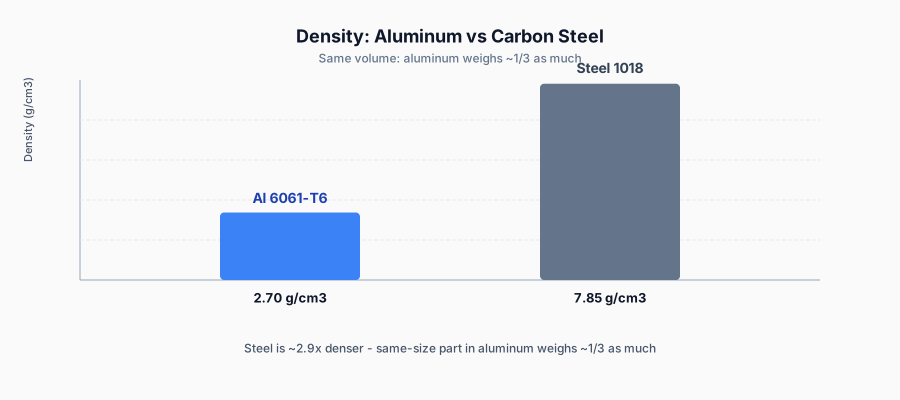
Aluminum and steel corrode by fundamentally different mechanisms, and understanding why determines whether your part lasts 5 years or 5 months. Aluminum forms a self-healing aluminum oxide (Al₂O₃) layer within seconds of air exposure — pitting occurs when chlorides break through this oxide locally. Carbon steel has no passive layer and corrodes uniformly (rust) in any moist environment. Stainless steels form a chromium oxide passive layer similar to aluminum's, but molybdenum (in 316L) is needed to resist chloride attack. The right choice depends on your specific corrosive environment.
| Environment | Al 6061 (bare) | Carbon Steel (bare) | SS 304 | SS 316L | Typical Material Pick |
|---|---|---|---|---|---|
| Indoor, low humidity | Excellent | Good (dry) | Excellent | Excellent | Al 6061 when low mass and raw material cost matter most |
| Outdoor, non-coastal | Good (anodize recommended) | Poor (rusts within weeks) | Very good | Very good | Anodized Al 6061 or SS 304 |
| Coastal / salt air | Acceptable (anodized) | Poor | Good | Very good | SS 316L or anodized 6061 |
| Food processing / CIP | Acceptable (hard anodized) | Not acceptable | Good | Excellent | SS 316L |
| High temp > 392°F (200°C) | Poor (softens) | Acceptable | Good | Good | Carbon steel or stainless |
| Bodily fluids / biological | Not recommended | Not acceptable | Good | Excellent | SS 316L or Ti-6Al-4V |
Machinability & Total Part Cost
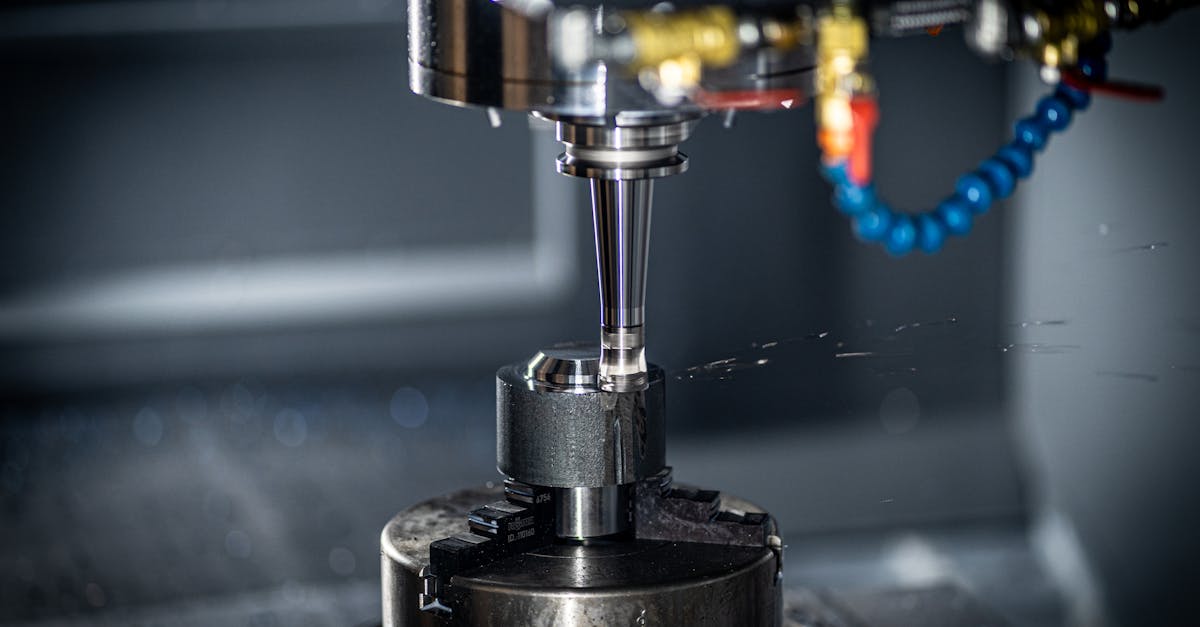
Your total part cost — not just raw material — is what matters, and aluminum's 3–4× faster machining speeds often outweigh carbon steel's lower bar stock price. Aluminum cuts at 600–1,000+ SFM (180–305+ m/min) vs. 150–400 SFM (46–122 m/min) for carbon steel. That speed difference translates directly to shorter cycle times and lower per-part cost, especially at production volumes.
Aluminum CNC Machining
- Cutting speeds: 600–1,200 SFM (180–370 m/min) with standard carbide (vs. 200–400 SFM / 60–120 m/min for steel)
- Tool life: 50–100× longer than stainless, 3–5× longer than carbon steel
- Chips: free-cutting, short, non-stringy — easy evacuation from pockets
- Coolant: beneficial but not mandatory for most operations
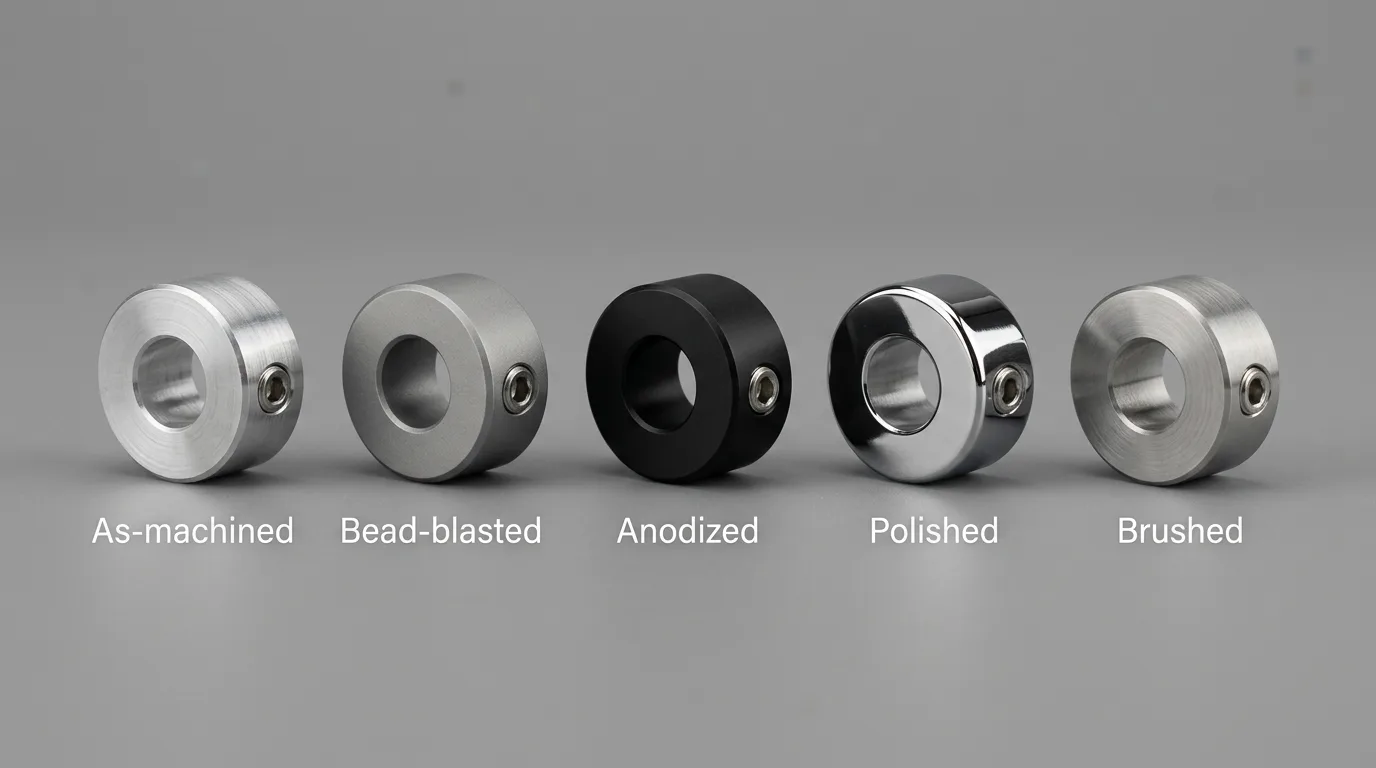
- Post-processing: anodize available for corrosion protection + aesthetics
Steel CNC Machining
- Cutting speeds: 150–400 SFM (46–122 m/min) for carbon steel, 50–150 SFM (15–46 m/min) for hardened alloy steel
- Tool life: significantly lower — carbide required, coatings (TiN, AlTiN) beneficial
- Chips: more variation — stringy chips in mild steel require chip breaker geometry
- Coolant: mandatory for stainless and alloy steels to prevent work hardening
- Post-processing: plating or coating required for corrosion protection (carbon steel)
| Cost Component | Al 6061-T6 | Steel 1018 | SS 316L | Steel 4140 PH |
|---|---|---|---|---|
| Raw material, $/lb ($/kg) | $3–5 ($7–11) | $0.40–0.70 ($0.88–1.54) | $4–7 ($9–15) | $0.90–1.40 ($2.00–3.09) |
| Machining speed (relative) | 1× | 0.3–0.4× | 0.2–0.3× | 0.25–0.35× |
| Tool wear (relative) | 1× | 3–5× | 8–12× | 5–8× |
| Surface treatment needed? | Anodize (optional) | Yes (rusts bare) | No (self-protecting) | Yes (bare steel) |
| Total part cost (relative) | 1× | 0.7–0.9× | 2.5–3.5× | 1.5–2× |
Decision Framework: When to Use Which
Walk through these five decision gates in order — each one eliminates a material family, and by the last question, your choice should be clear.
Does the operating temperature exceed 302°F (150°C)?
Use steel (carbon, alloy, or stainless depending on corrosion). Aluminum softens and loses temper above 302°F (150°C) — unsuitable for sustained elevated-temperature service.
Aluminum remains a candidate. Continue to the next question.
Does the part contact chlorides, bodily fluids, or require FDA food-contact compliance?
Use 316L stainless steel. Aluminum is acceptable with hard anodize for food contact (FDA 21 CFR 175.300), but 316L is the safer, lower-risk choice for biological or chloride-heavy environments.
Both aluminum and carbon/alloy steel remain candidates. Continue.
Is yield strength > 73 ksi (503 MPa) required?
Use steel. 7075-T6 aluminum reaches 73 ksi (503 MPa) yield — the highest achievable in common aluminum alloys. Above this, only steel (4140 PH: 130 ksi (896 MPa), 4340: 125+ ksi) or titanium can satisfy the requirement.
Aluminum handles the strength requirement. 6061-T6 (40 ksi (276 MPa)) covers most bracket and structural applications; step up to 7075-T6 only if FEA shows 6061 undersized.
Does the part need to be hardened and ground to tight tolerances (HRC > 35)?
Use steel. Only steel can be through-hardened, case-hardened, and finish-ground to tolerances tighter than ±0.0005 in. (0.013 mm) Aluminum's maximum hardness (HB 150 for 7075) precludes grinding to these levels.
If no other constraint applies, use aluminum 6061-T6. Lower machining cost, lower weight, anodize available for corrosion and aesthetics.
Is weight-to-cost optimization the primary design driver?
Use aluminum 6061-T6. Despite higher raw material cost per pound, lower density and faster machining speeds typically produce lighter parts at equal or lower total cost vs. carbon steel.
If weight is not critical and cost per part is the primary driver (high volume, simple geometry), carbon steel 1018 may be cheaper in total cost due to lower raw material price.
Need a Second Pass on Material Choice?
Upload your CAD file, loading notes, and operating environment. During quote review, we can compare aluminum, carbon steel, and stainless options against weight, corrosion, and budget targets before you release the part.
Review Material OptionsGo Deeper: Alloy-Specific Guides
Once you have decided on the material family, use these guides to choose the specific alloy and grade for your application.
Aluminum Compared: Steel, Stainless, Titanium & More
Treat this page as the hub when your real search is some version of "aluminum vs" another metal or alloy. Start here for the core trade-offs, then go deeper into the comparison that matches your design question: weight versus stiffness, corrosion resistance versus cost, or 6061-T6 versus 7075-T6 inside the aluminum family. That structure helps you move from a broad material shortlist to a production decision without opening four unrelated tabs.
Further Reading
- Material Selection Guide — broader framework covering metals, plastics, and composites.
- CNC Tolerances Guide — how material choice affects achievable tolerances and surface finish.
- DFM Best Practices — design rules for reducing cost across CNC, 3D printing, and sheet metal.
- Aluminum vs Steel vs Titanium for CNC Parts — three-way comparison with machinability ratings, cycle time multipliers, and alloy-specific data for Ti-6Al-4V.
Frequently Asked Questions
Ready to Compare Aluminum and Steel Paths?
Upload your CAD file to compare aluminum, steel, and stainless options with engineer-reviewed pricing typically within one business day. We can scope the material path during quoting, then confirm manufacturability after order approval.
Compare Material Quotes