Stainless Steel CNC Machining Services: Grade Selection & Design Rules
Stainless steel CNC machining services make sense when your part needs corrosion resistance, washdown durability, or higher-temperature stability than aluminum can deliver. In practice, grade choice does most of the work: 303 cuts fastest, 304 is the general-purpose default, and 316L is the upgrade for chlorides, cleaners, and medical hardware.
Why Stainless Steel for CNC Machined Parts
Stainless steel earns its place when the environment is more demanding than the geometry. Stainless grades protect themselves with a chromium-oxide passive layer. That thin film reforms after minor scratches, which is why stainless stays serviceable in wet, washdown, and mildly corrosive environments where bare carbon steel would rust quickly.
If you need a refresher on the process itself, start with what is CNC machining. If you are still deciding whether stainless is even the right material family, compare it against aluminum in our aluminum vs stainless steel guide or step back to the broader material selection guide.
In practice, the decision sequence is simple. First ask what the part will touch: water, chlorides, cleaners, blood, solvents, or just indoor air. Then ask how much machining work the part needs: deep pockets, long threads, small drilled features, or repeated tight datums. Environment usually points you to 304 or 316L; machining effort tells you whether 303 is a better production choice.
303 stainless
Sulfur additions improve chip break and reduce work hardening. Use for fittings, shafts, manifolds, and threaded parts when weldability and top-tier chloride resistance are not required.
304 stainless
Best for general corrosion resistance, food equipment, indoor washdown hardware, and fabricated machine parts where you want the standard 300-series grade most suppliers stock.
316L stainless
The 2-3% molybdenum addition raises pitting resistance and makes 316L the safer choice for saline exposure, aggressive cleaning chemistry, and many medical or life-science assemblies.
Read each row left to right
Match the dominant service condition first. If two rows both apply, let environment break the tie before machinability.
Clean indoor / mild washdown
If corrosion matters but chloride exposure is limited, start with the standard 300-series grade most teams already know.
304 stainless
Default choice for indoor washdown hardware, food equipment, and fabricated machine parts.
Long runs / heavy threading
If chip control, thread quality, and spindle time dominate, free-machining behavior matters more than maximum corrosion resistance.
303 stainless
Best for fittings, shafts, manifolds, and repeat threaded parts when weldability and chloride exposure are not the deciding constraints.
Salt, bleach, saline, sterilization
Chlorides and aggressive cleaning chemistry raise pitting risk sooner than many early-stage teams expect.
316L stainless
Use when saline, bleach, or repeated sterilization cycles matter more than peak machinability.
303 vs 304 vs 316L: Quick Machinability Comparison
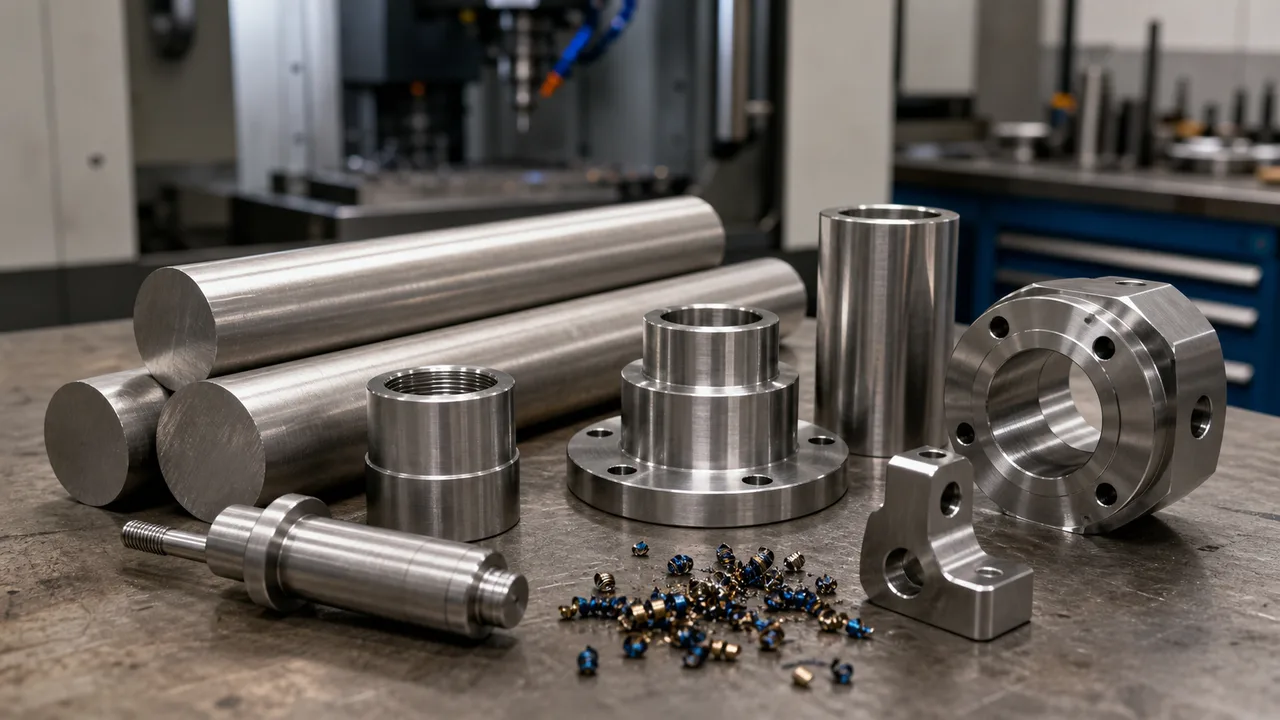
Think of 303 as the free-machining version, 304 as the general-purpose baseline, and 316L as the corrosion upgrade that cuts a little slower. This section is intentionally a selection summary rather than a full metallurgy deep dive. For the full chemistry and pitting resistance breakdown between 304 and 316L, use our 304 vs 316 stainless steel comparison.
| Grade | Machinability | Corrosion Class | Weldability | Typical Use | Typical Raw Material Cost |
|---|---|---|---|---|---|
| 303 | Highest of the three; approx. 70-78% vs B1112 steel = 100% | Good for dry or mild service, but below 304 because sulfide inclusions interrupt the passive layer | Poor - generally avoid welded assemblies | Threaded fittings, shafts, manifolds, valve bodies, long production runs | $4-6/lb ($9-13/kg) |
| 304 | General-purpose baseline; approx. 45-50% | Strong all-around resistance for indoor washdown, food equipment, and outdoor exposure without chlorides | Good, especially in 304L form | Machine frames, enclosures, brackets, food-contact hardware | $4-8/lb ($9-18/kg) |
| 316L | Lowest of the three; approx. 36-45% because chip control and work hardening are less forgiving | Best pitting resistance of the group because 2-3% Mo raises PRE into the mid-20s | Good, with lower carbide precipitation risk after heat input | Medical hardware, saline service, chemical washdown, coastal or marine-adjacent parts | $5-9/lb ($11-20/kg) |
The one fast rule
If the part needs lots of threading, long turned features, or stable cycle time at moderate volume, start by asking whether 303 is acceptable. If chloride exposure, frequent cleaning chemistry, or medical washdown are in scope, jump straight to 316L and design around the slower cycle time.
When this still is not enough
If your drawing needs stainless corrosion resistance and much higher strength than annealed 300-series material can provide, step outside this trio and review the steel grades for CNC machining guide for 17-4 PH selection.
Achievable Tolerances for Stainless CNC Parts
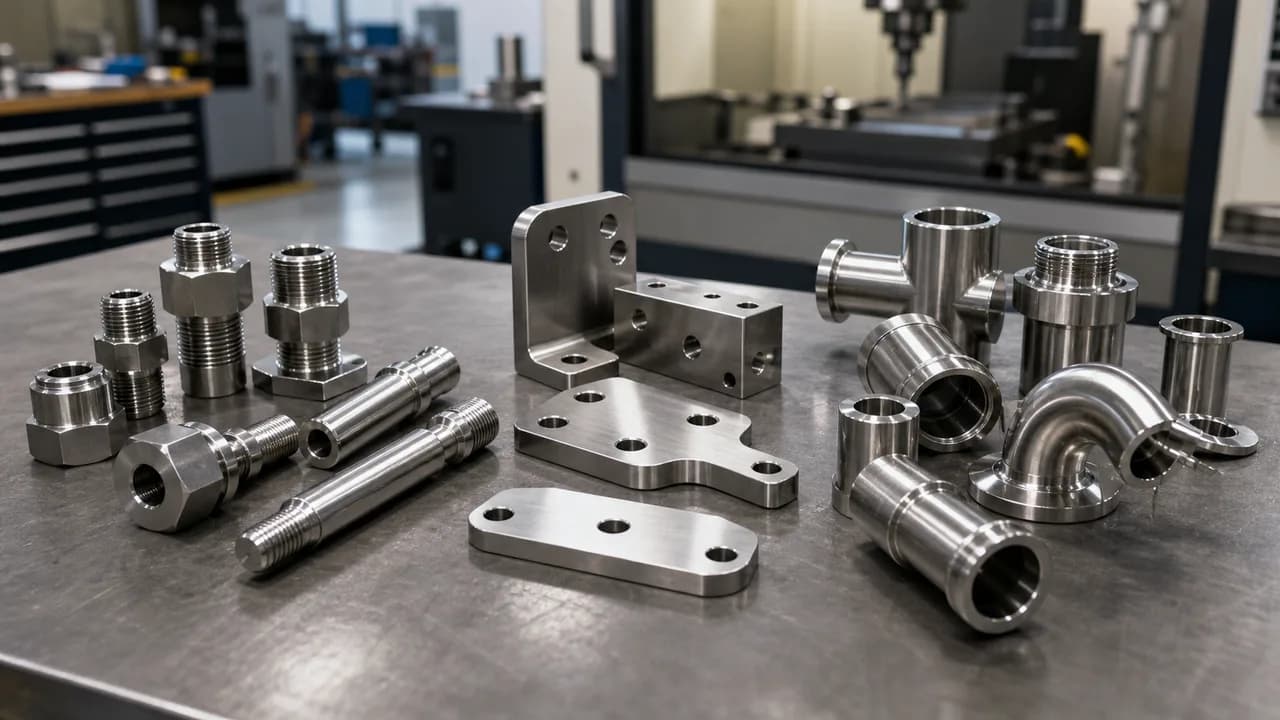
A tolerance is the allowed variation band around your target dimension, and stainless parts usually lose money before they lose capability. Standard CNC machining tolerance is +/-0.005 in. (+/-0.13 mm). You can go tighter, but the cost jump usually comes from extra finish passes, lower cutting parameters, and more inspection rather than from the raw material itself.
| Feature Type | 303 | 304 | 316L | What drives the result |
|---|---|---|---|---|
| General milled or turned dimensions | +/-0.005 in. (+/-0.13 mm) | +/-0.005 in. (+/-0.13 mm) | +/-0.005 in. (+/-0.13 mm) | Baseline for most CNC work. Use this unless assembly function says tighter. |
| Critical datums, shoulders, and gasket faces | +/-0.002 in. (+/-0.05 mm) | +/-0.002 in. to +/-0.003 in. (+/-0.05 to +/-0.08 mm) | +/-0.002 in. to +/-0.003 in. (+/-0.05 to +/-0.08 mm) | Needs rigid workholding, consistent stock, and dedicated finish passes. |
| Bored or reamed locating bores | +/-0.0005 in. to +/-0.001 in. (+/-0.013 to +/-0.025 mm) | +/-0.001 in. to +/-0.0015 in. (+/-0.025 to +/-0.038 mm) | +/-0.001 in. to +/-0.002 in. (+/-0.025 to +/-0.05 mm) | Tool deflection, bore depth, and heat at the cutting edge matter more than nominal diameter alone. |
| Threaded features in blind holes | Standard class 2B/2A is straightforward | Prefer thread milling over aggressive tapping when depth exceeds about 2x diameter | Prefer thread milling and generous lead-in chamfers | Chip evacuation and work hardening control success here. |
| Bearing seats or precision slip fits | Possible, often with boring + reaming or grinding | Possible, but plan for secondary ops and tighter inspection | Possible, but least forgiving of the three | Once you ask for sub-thousandth repeatability, process route matters more than material family. |
Keep unsupported walls practical
Thin stainless walls deflect under tool pressure sooner than many designers expect. As a first-pass DFM rule, keep unsupported walls at or above 0.040 in. (1.0 mm) unless you are willing to slow the cycle and accept more process development.
Respect hole depth on 304 and 316L
The deeper the feature, the more time the tool spends rubbing and reheating the cut. Long blind holes, thread depths above 2x diameter, and interrupted boring all magnify work-hardening risk on austenitic stainless.
Call out only functional precision
If a face only needs cosmetic flatness, do not assign bearing-seat tolerances. A stainless print with one over-tightened datum can multiply machining cost for the entire setup plan.
Need stainless steel machining services without over-specifying the print?
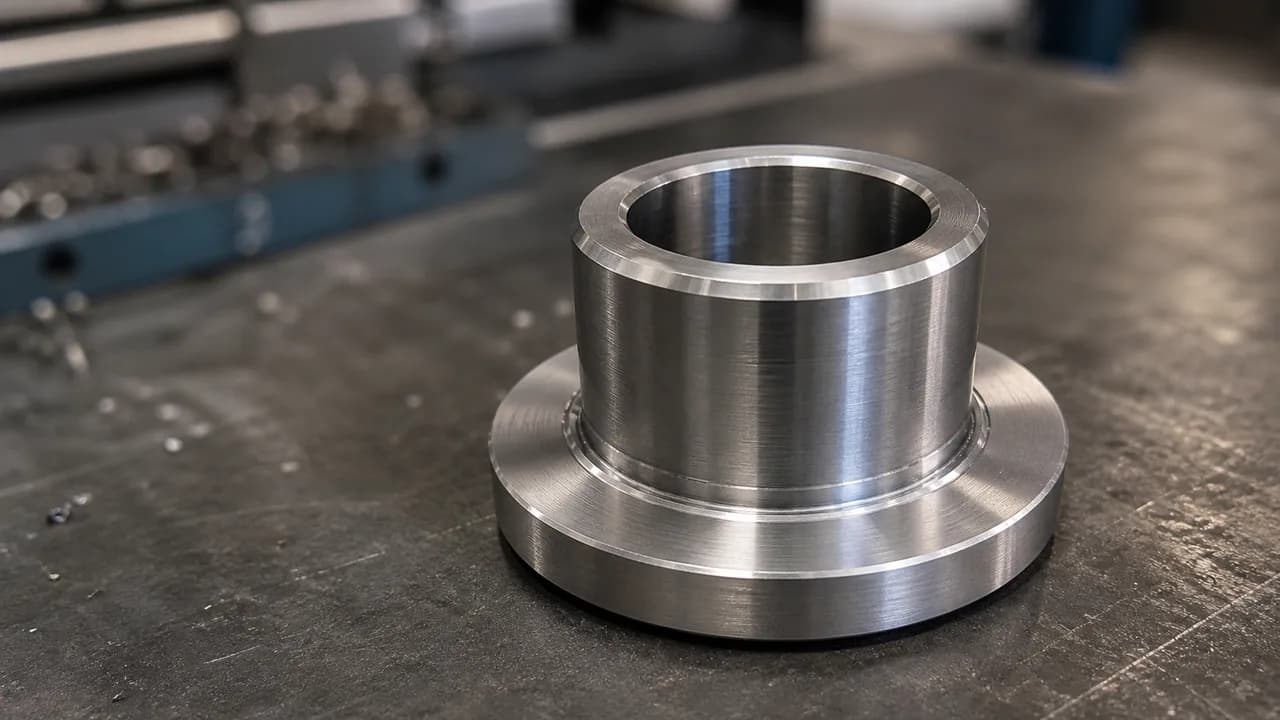
MakerStage supports CNC machining services for stainless parts with CMM inspection on request and material certifications on request. If your drawing is tighter than the assembly needs, that review is where you recover cycle time before the quote turns into a cost problem.
Upload your stainless part for reviewCutting Parameters & Tool Selection
Stainless cuts best when the tool is actually shearing material, not rubbing on it. That sounds obvious, but it is the root cause behind most stainless problems: slow spindle speed, timid feed, worn inserts, or light stepovers can harden the surface and make the next pass worse instead of better.
| Grade | Carbide Starting Range | Tooling Bias | Coolant / Chip Control | Shop-floor consequence |
|---|---|---|---|---|
| 303 | 180-300 SFM (55-91 m/min) | Positive-rake carbide works well; sulfur helps break chips | Flood coolant is helpful but less critical than on 304/316L | Best choice for faster cycle time on threaded or turned features |
| 304 | 150-250 SFM (46-76 m/min) | Sharp coated carbide, stable radial engagement, no spring-pass rubbing | Flood coolant and dependable chip evacuation are important | Most common grade, but work hardening punishes timid finishing passes |
| 316L | 120-220 SFM (37-67 m/min) | Use the lower end on interrupted cuts and small tools; keep edges sharp | High-pressure flood or well-directed coolant is strongly preferred | Tool wear rises quickly when heat builds near the edge or chips recut |
Why carbide is still the default
Carbide is the safest default for low-to-medium volume stainless parts because it tolerates mixed features, variable engagement, and prototype interruptions better than ceramic. It also gives you more flexibility when the same setup includes spot drilling, pocketing, thread milling, and finishing in one operation.
Where ceramic inserts actually belong
Ceramic or whisker-reinforced inserts can make sense on continuous production turning where surface speed stays high and the cut is stable. They are far less forgiving on interrupted cuts, small-batch work, and thin-wall geometry. For most mixed-feature prototype parts, the risk of edge chipping outweighs the speed benefit.
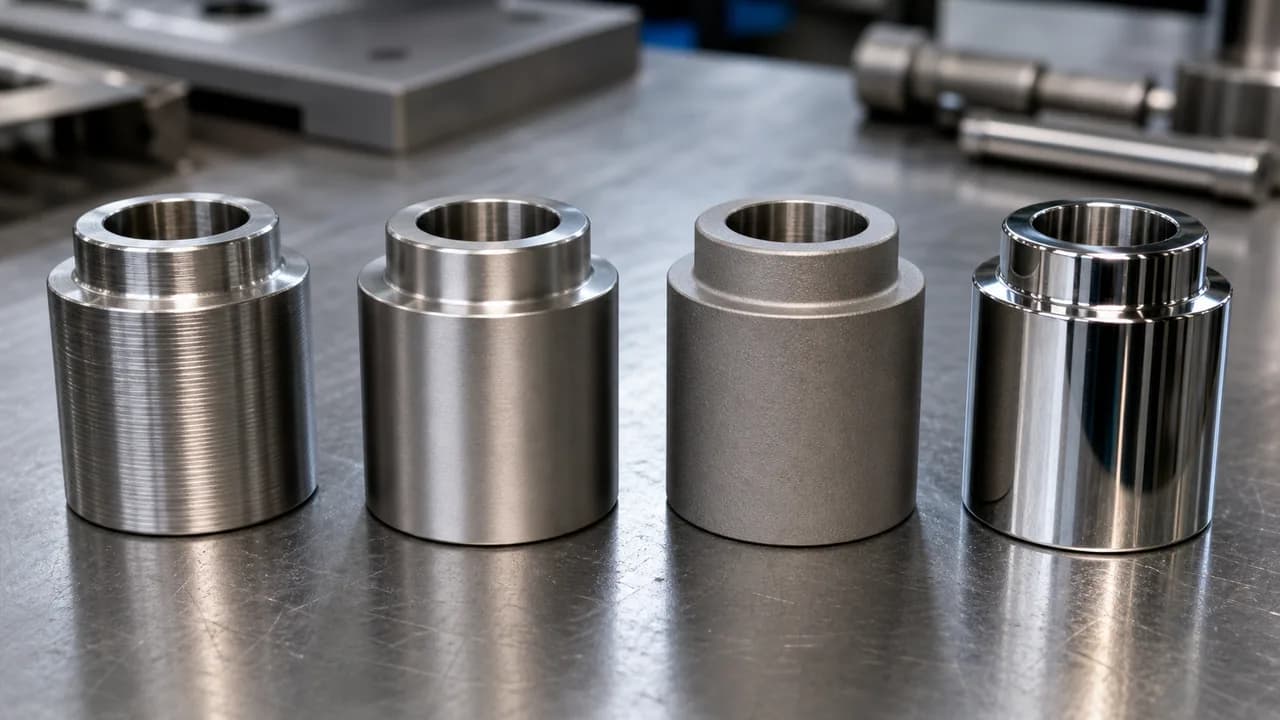
Surface Finishes for Stainless Parts
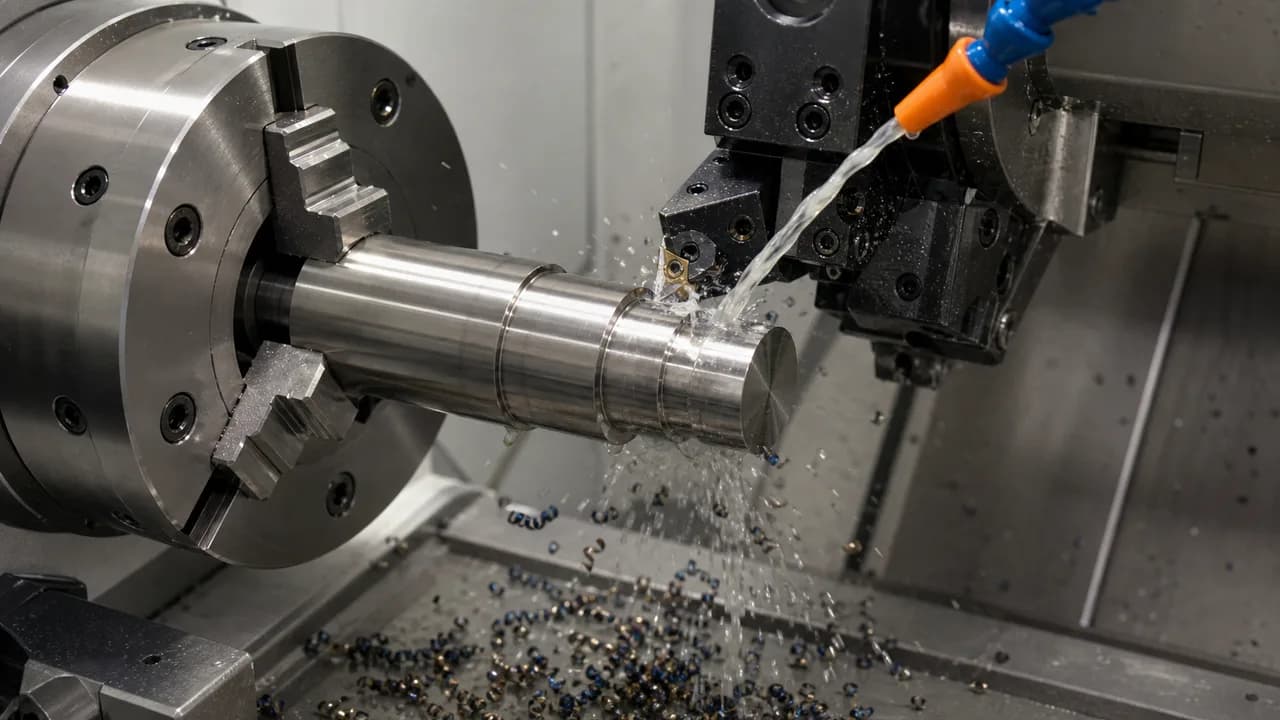
Finish selection is not cosmetic bookkeeping - it changes corrosion performance, cleanability, and sometimes final dimensions. The two stainless-specific decisions are whether you need passivation and whether you need the smoother, brighter surface that electropolishing creates. If finish selection is the real bottleneck, use the full surface finish guide for the standards and drawing callouts.
| Finish | Typical Result | Dimensional Effect | Use When | Reference Standard |
|---|---|---|---|---|
| As-machined milling / turning | Ra 63-125 microin. (1.6-3.2 micrometers) milled, Ra 32-63 microin. (0.8-1.6 micrometers) turned | No secondary dimensional change | Default for general housings, brackets, internal features, and non-sealing surfaces | Per drawing roughness callout or default shop standard |
| Passivation | Restores the chromium oxide passive film without changing the visible texture | No meaningful thickness change | Medical, food-contact, washdown, and any part that should leave the shop fully cleaned and decontaminated | ASTM A967 or AMS 2700 |
| Electropolish | Bright, smooth surface at roughly Ra 4-16 microin. (0.1-0.4 micrometers) | Removes about 0.0002-0.001 in. (0.005-0.025 mm) | Cleanability, low-friction fluid paths, reflective cosmetic finish, or high-end corrosion resistance | ASTM B912 |
| Bead blast or satin brush | Uniform matte or directional cosmetic finish; usually rougher than electropolish | Light surface texture change with no heavy coating buildup | Handles, exterior covers, and stainless panels where glare and fingerprints matter | Process note on the drawing; specify media or grain direction |
Finish selection rule of thumb
Passivation is the default corrosion-restoring step after machining. Electropolish is the premium option when you need a smoother micro-profile, easier cleaning, or enhanced corrosion performance beyond passivation alone. If the drawing only says "stainless steel finish" without a functional reason, you do not yet have a real finish requirement.
Cost Factors & Lead-Time Considerations
Stainless cost is driven more by cycle time, tool wear, and finishing route than by the bar stock invoice alone. Engineers often focus on the material price delta between 304 and 316L. In a real quote, the bigger cost swings usually come from deep pockets, small end mills, finish bore tolerances, and whether the part also needs passivation or electropolish.
| Cost Driver | Why it hits stainless harder | How to control it |
|---|---|---|
| Lower metal removal rate | 304 and 316L run at lower surface speed than aluminum and spend more time in cut for the same volume removed. | Open corner radii, avoid deep narrow pockets, and use 303 where corrosion requirements allow. |
| Insert wear and tool changes | Heat stays near the cutting edge, so flank wear and built-up edge arrive sooner on small tools and long runs. | Reduce interrupted cuts, keep radial engagement stable, and avoid over-tolerancing cosmetic features. |
| Deburring and edge conditioning | Austenitic grades produce stringier chips and tougher burrs than many aluminum parts. | Specify realistic edge break requirements and leave room for deburring access. |
| Secondary finishing | Passivation adds process time; electropolish adds both time and dimensional change management. | Use passivation by default, but reserve electropolish for surfaces that truly need it. |
| Inspection load | Tight bores, datums, and finish requirements on stainless often need more probing, CMM time, or lot verification. | Concentrate tight tolerances on assembly-driving features only. |
Prototype expectation
A straightforward 303 or 304 prototype with standard tolerances and passivation usually sits in the same quoting rhythm as other CNC parts. The moment you add tight bores, small tools, or 316L electropolish, the routing becomes longer and scheduling gets less flexible.
Production expectation
Production stainless becomes economical when the geometry is stable enough for dedicated workholding, toolpath tuning, and predictable insert life. That is why 303 often wins on repeat hardware even when 304 could survive the environment.
Cheapest useful improvement
Replace needless all-over tight tolerances with datum-based control on the few surfaces that matter. That change often saves more quote value than switching from 316L to 304.
Frequently Asked Questions
Related Resources
Ready to Quote a Stainless Steel CNC Part?
Upload your CAD model for a stainless quote. MakerStage supports CNC machined stainless parts with 3-axis and 5-axis milling, turning, passivation, and CMM inspection on request.
Start a stainless quote