Aluminum vs Titanium CNC Machining
Both are lightweight metals used in precision-machined parts — but they serve very different performance regimes. Aluminum is faster to machine, cheaper, and sufficient for most structural work. Titanium steps in when aluminum hits its limits.
Key data: Ti-6Al-4V delivers 130 ksi (896 MPa) UTS vs. 6061-T6's 45 ksi (310 MPa), with 1.8× higher specific strength — at 5–10× the machining cost.
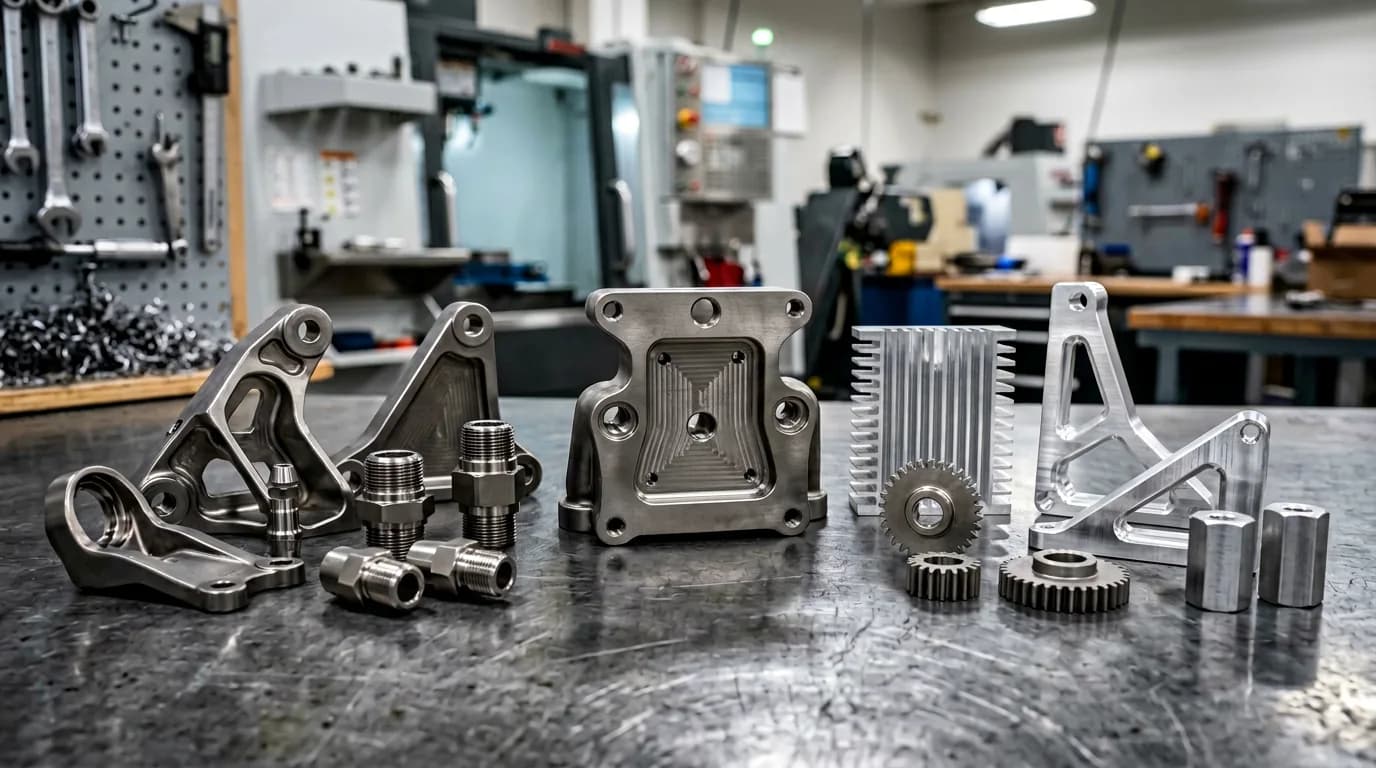
Short Answer
Choose aluminum (6061-T6) when cost, machinability, and moderate strength are priorities. Choose titanium (Ti-6Al-4V) when you need higher strength-to-weight ratio, temperatures above 300°F (149°C), corrosion resistance superior to anodized aluminum, or biocompatibility for medical devices. The full comparison is below.
- ✓ UTS requirement exceeds 45 ksi (310 MPa, 6061-T6 limit)
- ✓ Operating temperature sustained above 300°F (149°C)
- ✓ Corrosion exposure: seawater, body fluids, strong acids
- ✓ Implantable medical device (biocompatibility required)
- ✓ Maximum specific strength needed (lightweighting critical)
- ✓ Structural analysis passes at 45 ksi (310 MPa) UTS with adequate FOS
- ✓ Operating temperature stays below 300°F (149°C)
- ✓ Cost and cycle time are primary constraints
- ✓ Prototype or short-run production where budget is limited
- ✓ Corrosion environment is mild (anodizing is sufficient)
Titanium vs Aluminum: The Core Trade-Off
Aluminum and titanium are both lightweight structural metals, but they occupy different performance regimes. Aluminum is the obvious choice when cost, machinability, and moderate strength are the priorities. Titanium is justified when the application demands higher strength-to-weight ratio, elevated temperature performance, or superior corrosion resistance — and the budget supports the premium.
- Structural parts at moderate stress (<35 ksi / 241 MPa working stress)
- High-volume production where cost is primary driver
- Parts operating below 250°F (121°C)
- Applications benefiting from anodizing (decorative, color coding)
- Prototyping where budget is limited
- Weight-critical structural parts with FOS <2 in aluminum (insufficient)
- Operating temperature 300–600°F (149–315°C)
- Corrosive environments: seawater, body fluids, acids
- Implantable medical devices (biocompatibility mandatory)
- Fatigue-critical components with high cycle counts
- 7075-T6 aluminum: 74 ksi (510 MPa) UTS — higher strength than 6061 at aluminum cost (~2× machining)
- 2024-T351 aluminum: 68 ksi (469 MPa) UTS — high-strength structural at lower cost than titanium
- 17-4 PH stainless: comparable strength, better at high temp, lower cost than Ti but denser
- Grade 2 CP titanium: where corrosion matters but high strength not required
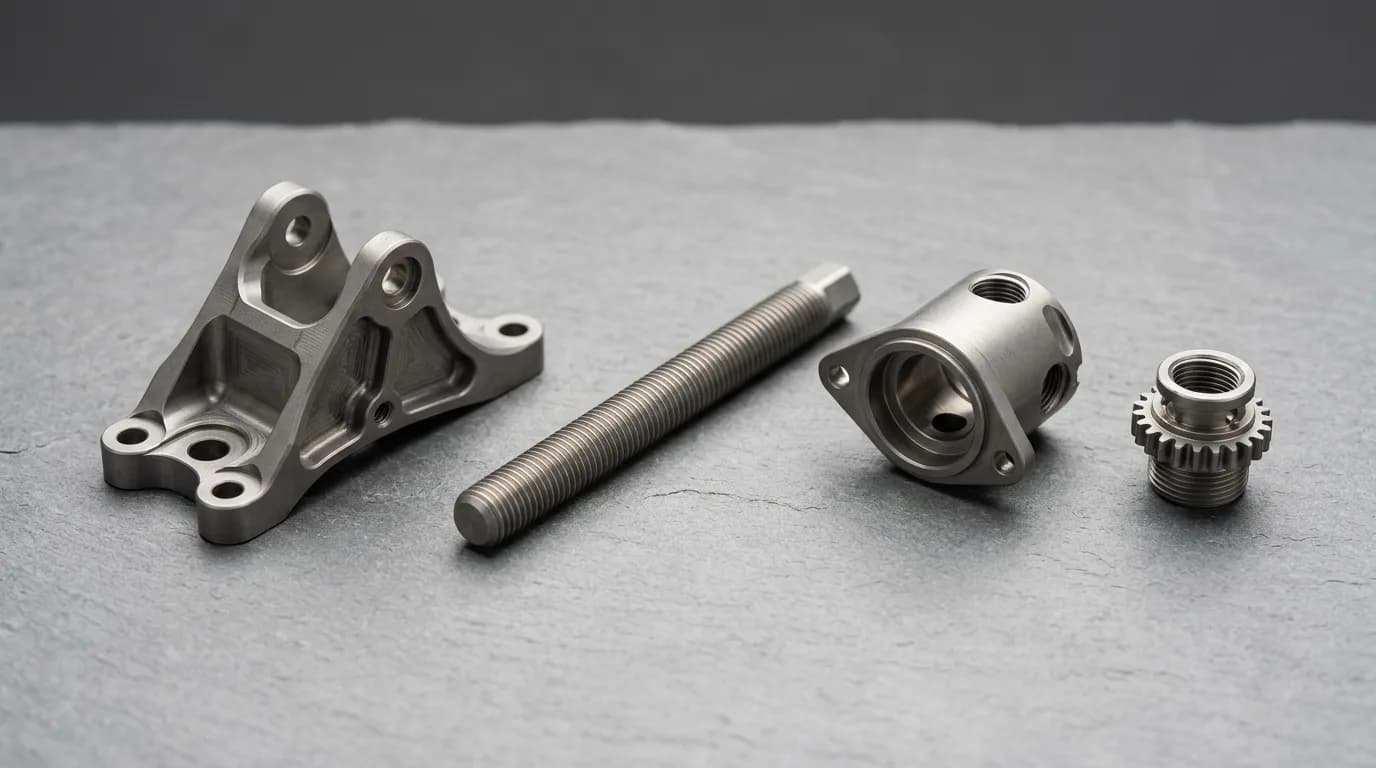
Properties: Ti-6Al-4V vs 6061-T6 vs 7075-T6
| Property | Ti-6Al-4V (Gr.5) | 6061-T6 Al | 7075-T6 Al |
|---|---|---|---|
| UTS | 130 ksi (896 MPa) | 45 ksi (310 MPa) | 74 ksi (510 MPa) |
| 0.2% Yield | 120 ksi (827 MPa) | 40 ksi (275 MPa) | 67 ksi (462 MPa) |
| Density | 0.160 lb/in³ (4.43 g/cm³) | 0.098 lb/in³ (2.71 g/cm³) | 0.102 lb/in³ (2.82 g/cm³) |
| Specific strength (UTS/ρ) | ~813 ksi·in³/lb | ~459 ksi·in³/lb | ~726 ksi·in³/lb |
| Elastic modulus | 16 Msi (110 GPa) | 10 Msi (69 GPa) | 10.4 Msi (72 GPa) |
| CTE | 4.9 µin./in./°F (8.8 µm/m·°C) | 12.9 µin./in./°F (23.2 µm/m·°C) | 12.9 µin./in./°F (23.2 µm/m·°C) |
| Thermal conductivity | 6.7 W/m·K | 167 W/m·K | 130 W/m·K |
| Max service temp | 600°F (315°C) | 300°F (149°C) | 275°F (135°C) |
| Fatigue endurance limit | ~75 ksi (517 MPa) | ~15 ksi (103 MPa) | ~23 ksi (159 MPa) |
| Corrosion resistance | Excellent (TiO₂ passive) | Good (anodized) | Moderate (sensitive to SCC) |
| Machinability rating | ~22% | ~170% | ~200% |
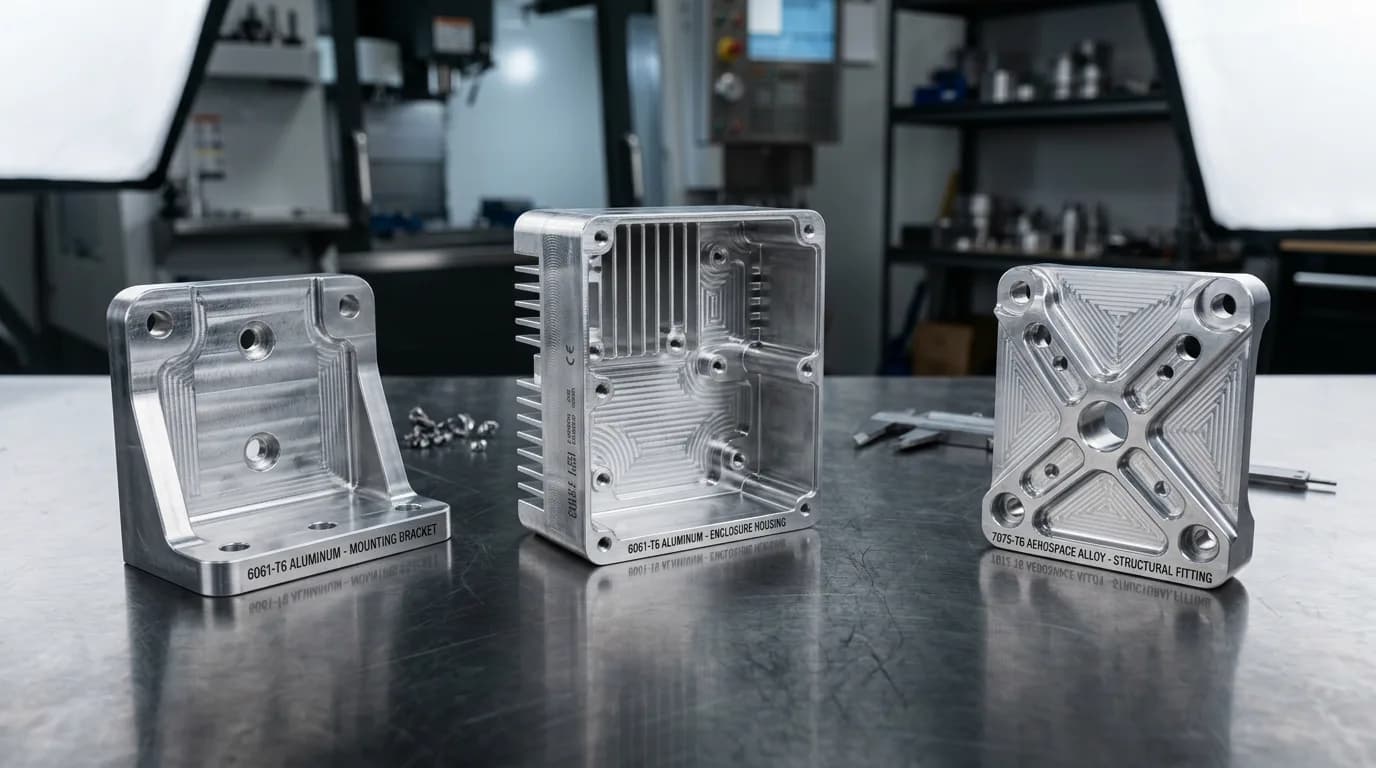
Titanium vs Aluminum: Machining Parameters
| Parameter | Ti-6Al-4V | 6061-T6 Aluminum |
|---|---|---|
| Rough milling SFM | 80–120 (24–37 m/min) | 500–1,000 (152–305 m/min) |
| Finish milling SFM | 120–150 (37–46 m/min) | 1,000–1,500 (305–457 m/min) |
| Feed per tooth (milling) | 0.002–0.005 in. (0.05–0.13 mm) | 0.004–0.010 in. (0.10–0.25 mm) |
| Turning SFM | 100–180 (30–55 m/min) | 400–800 (122–244 m/min) |
| Drilling SFM | 80–100 (24–30 m/min) | 300–500 (91–152 m/min) |
| Coolant requirement | 500–1,000 psi (35–70 bar) flood (mandatory) | Standard flood, mist, or dry |
| Insert life (relative) | 0.2–0.4× aluminum | 1× (baseline) |
| Relative cycle time | 5–8× slower | 1× (baseline) |
| Min. wall thickness (practical) | 0.060 in. (1.5 mm) | 0.020 in. (0.5 mm) |
| Standard achievable tolerance | ±0.005 in. (±0.13 mm) | ±0.005 in. (±0.13 mm) |
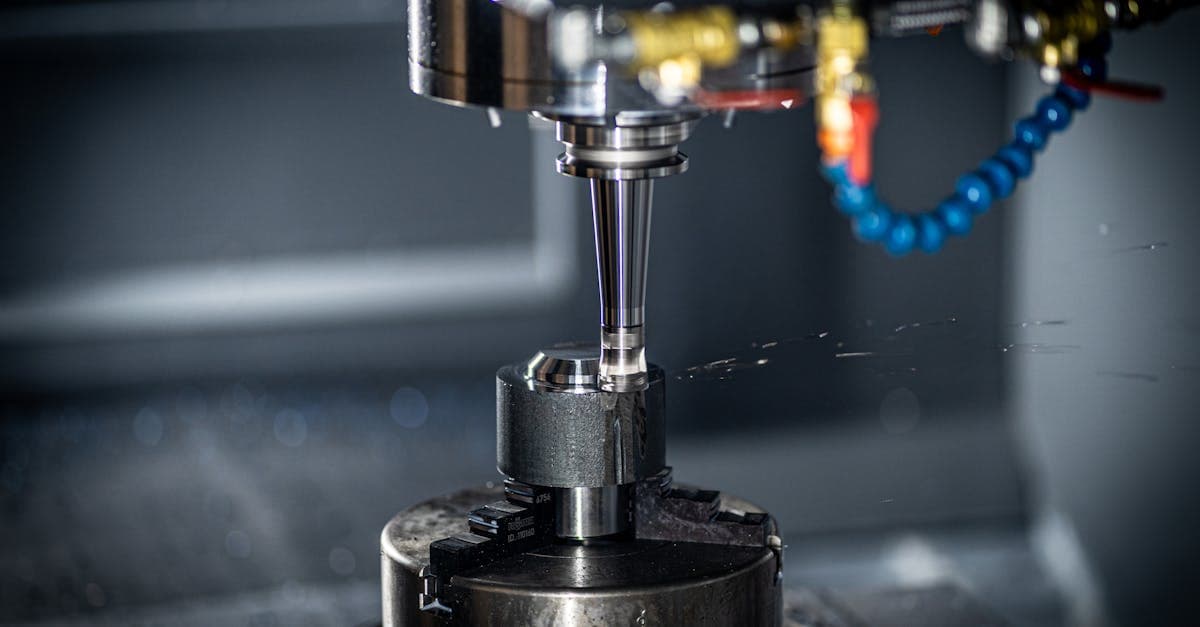
Cost Comparison: Titanium vs Aluminum CNC Parts
| Cost Driver | Ti-6Al-4V | 6061-T6 Al |
|---|---|---|
| Material (bar stock) | $15–30/lb ($33–66/kg) | $3–6/lb ($7–13/kg) |
| Setup cost (similar geometry) | Similar | Similar |
| Machine time (relative) | 5–8× | 1× (baseline) |
| Insert consumption | 3–5× aluminum rate | 1× (baseline) |
| Coolant system | High-pressure 500–1,000 psi (35–70 bar) required | Standard flood or mist |
| Scrap rate | 5–10% (work hardening risk) | <2% |
| Total part cost (relative) | 5–10× | 1× |
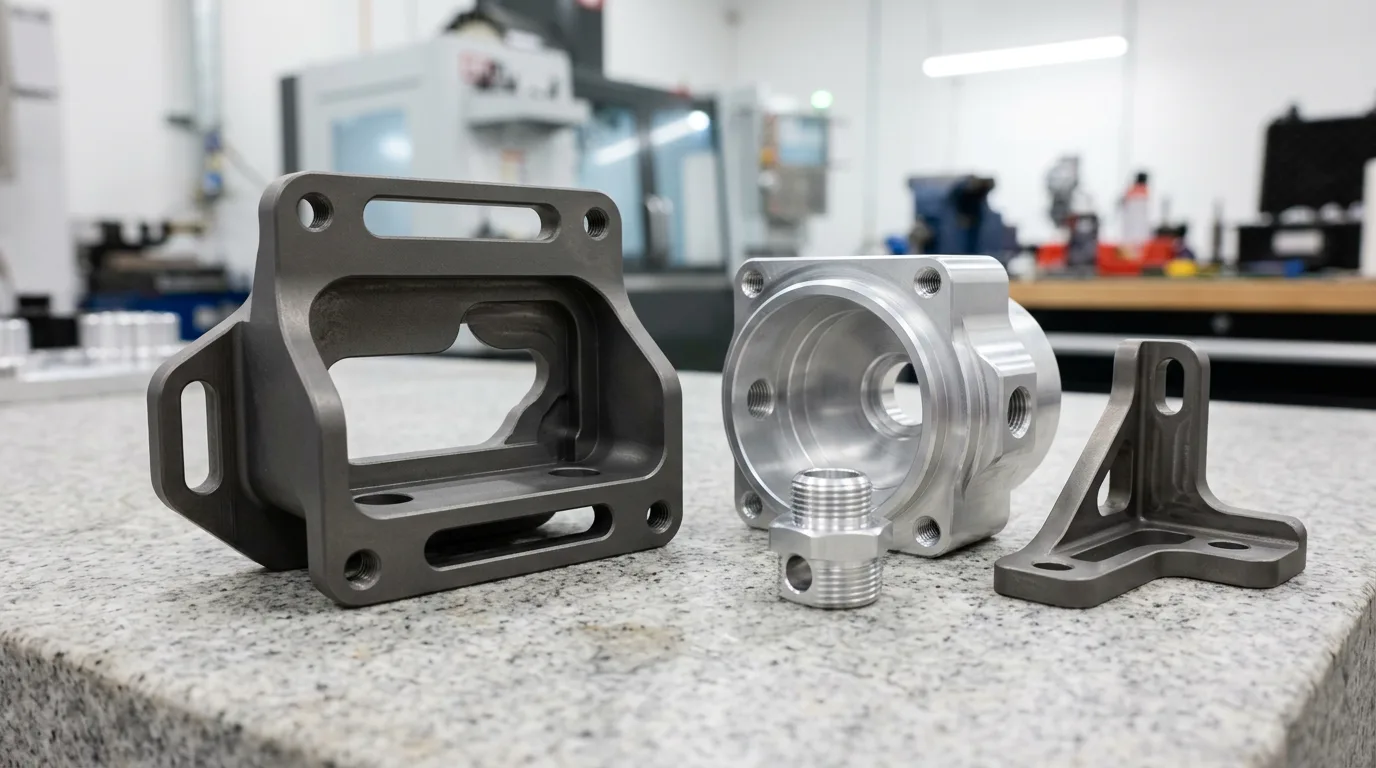
Material Selection Decision Framework
| Application Requirement | Choose Aluminum | Choose Titanium |
|---|---|---|
| Working stress | <35 ksi (240 MPa) — 6061-T6 adequate with FOS ≥2 | >60 ksi (414 MPa) or FOS <2 in aluminum |
| Operating temperature | <275°F (135°C) | >300°F (149°C) sustained |
| Corrosion environment | Dry air, indoor, mild chemicals (anodized) | Seawater, body fluids, reducing acids |
| Weight sensitivity | Moderate — aluminum saves 60% weight vs. steel | Maximum — titanium provides 1.8× better specific strength vs. aluminum |
| Biocompatibility required | Not required | Implantable devices (Grade 5 or Grade 23) |
| Fatigue loading | Low cycle, static, or vibration-damped | High-cycle fatigue (>10⁶ cycles) — Ti endurance limit 5× higher |
| Budget | Cost-sensitive — prototype or production at scale | Performance-critical — weight or temperature justify premium |
Quote Titanium or Aluminum Parts
MakerStage can compare Ti-6Al-4V, 6061-T6, 7075-T6, and other alloys against your geometry and loading needs. Upload your STEP file for a side-by-side quote review typically within one business day.
Get a QuoteFrequently Asked Questions
Quote Titanium or Aluminum Parts
Ti-6Al-4V or 6061-T6. Upload your STEP file to compare vetted shop quotes typically within one business day, with material fit and manufacturability tradeoffs reviewed before production.
Compare Titanium and Aluminum Quotes