Stainless Steel vs Titanium Machining
Stainless steel and titanium are both corrosion-resistant metals used in demanding CNC applications — but they handle corrosion differently and at very different weights and costs.
Key data: Ti-6Al-4V is 45% lighter than 316L (4.43 vs. 8.03 g/cm³), with stronger corrosion resistance in chloride and reducing acid environments — at 2–4× the machining cost.
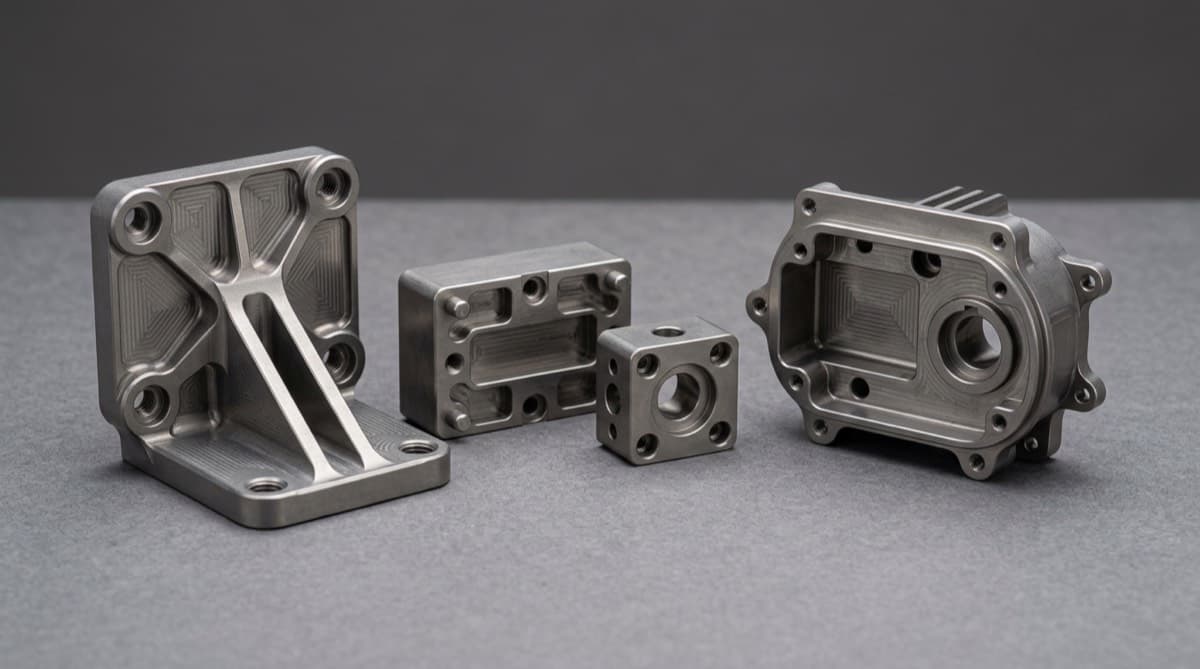
Short Answer
Choose 316L stainless when cost, weldability, and moderate corrosion resistance are priorities. Choose titanium (Ti-6Al-4V) when you need 45% weight savings, superior chloride/seawater corrosion resistance, or biocompatibility — and the budget supports a 2–4× machining cost premium.
- ✓ Weight is critical — titanium is 45% lighter for same volume
- ✓ Seawater/chloride environment (stainless pits; titanium does not)
- ✓ Reducing acid exposure (HCl, H₂SO₄ — stainless degrades)
- ✓ Implantable medical device requiring biocompatibility
- ✓ Operating temperature to 600°F (315°C) with corrosion resistance
- ✓ Mild corrosion environment where anodizing isn't sufficient
- ✓ Need to weld in air without inert gas shielding
- ✓ Very high strength required (>130 ksi / 896 MPa) — 17-4 PH H900 reaches 190 ksi (1310 MPa)
- ✓ Wear resistance is a priority (harder surface than titanium)
- ✓ Cost and machinability are primary constraints
Titanium vs Stainless Steel: The Core Trade-Off
Both titanium and stainless steel are corrosion-resistant engineering metals, but they occupy different performance and cost tiers. Stainless steel offers good corrosion resistance at a lower cost and is easier to machine. Titanium provides superior corrosion resistance, significantly lower density, and higher specific strength — justified when weight, temperature, or aggressive corrosion environments demand it.
Choose 316L Stainless
- Budget-constrained applications
- Indoor or mild-outdoor environments
- General chemical equipment (non-chloride)
- High-production volume parts
- Where weight is not critical
Choose Ti-6Al-4V
- Marine/seawater immersion
- Weight-critical structural or medical
- Body-implantable devices
- High-temperature to 600°F (315°C)
- Reducing acid environments
Consider 17-4 PH Stainless
- Need >150 ksi (1034 MPa) strength
- Cost must be lower than titanium
- Temperature below 500°F (260°C)
- Not implantable (not biocompatible)
- Good availability, shorter lead time
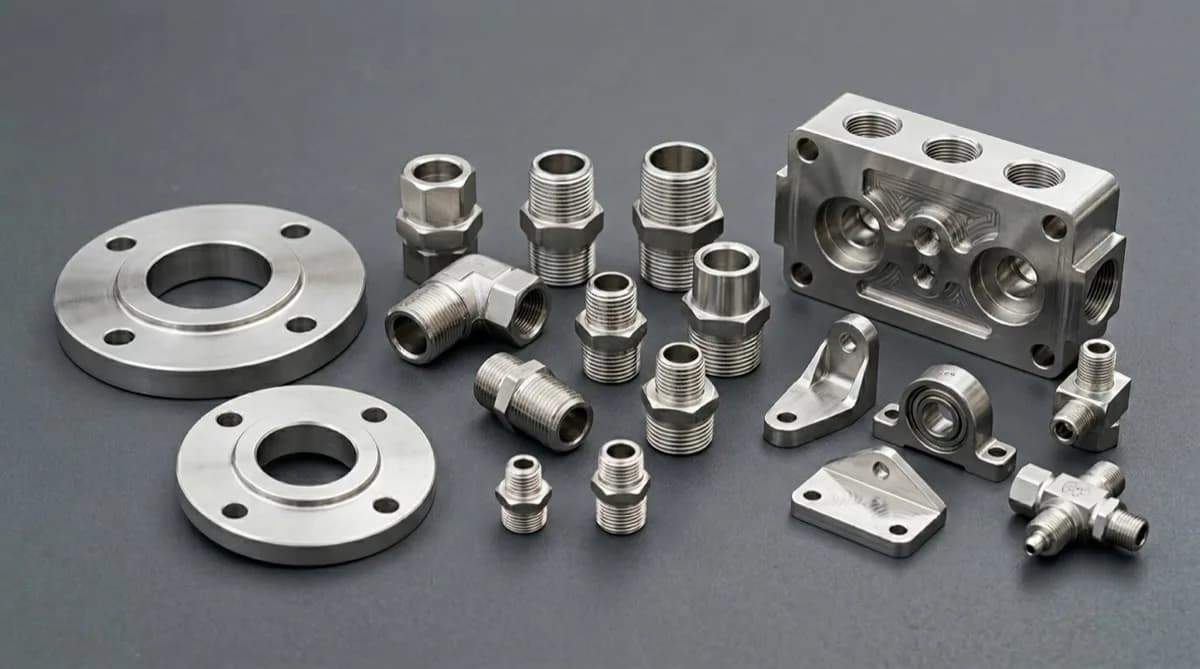
Properties: Titanium vs Stainless Steel Alloys
| Property | Ti-6Al-4V | 304 SS | 316L SS | 17-4 PH H900 |
|---|---|---|---|---|
| UTS | 130 ksi (896 MPa) | 84 ksi (579 MPa) | 85 ksi (586 MPa) | 190 ksi (1,310 MPa) |
| Density | 0.160 lb/in³ (4.43) | 0.290 lb/in³ (8.03) | 0.290 lb/in³ (8.03) | 0.280 lb/in³ (7.75) |
| Specific strength | ~813 | ~290 | ~293 | ~679 |
| Elastic modulus | 16 Msi (110 GPa) | 28 Msi (193 GPa) | 28 Msi (193 GPa) | 28 Msi (193 GPa) |
| CTE | 4.9 µin./in./°F (8.8 µm/m·°C) | 9.9 µin./in./°F (17.8 µm/m·°C) | 9.9 µin./in./°F (17.8 µm/m·°C) | 6.0 µin./in./°F (10.8 µm/m·°C) |
| Max service temp | 600°F (315°C) | 1,500°F+ (815°C+) | 1,500°F+ (815°C+) | 600°F (315°C) |
| Machinability | ~22% | ~45% | ~40% | ~35% |
| Biocompatible | Yes | No | No | No |
| Seawater resistance | Immune | Risk of pitting | Risk of crevice corr. | Risk of crevice corr. |
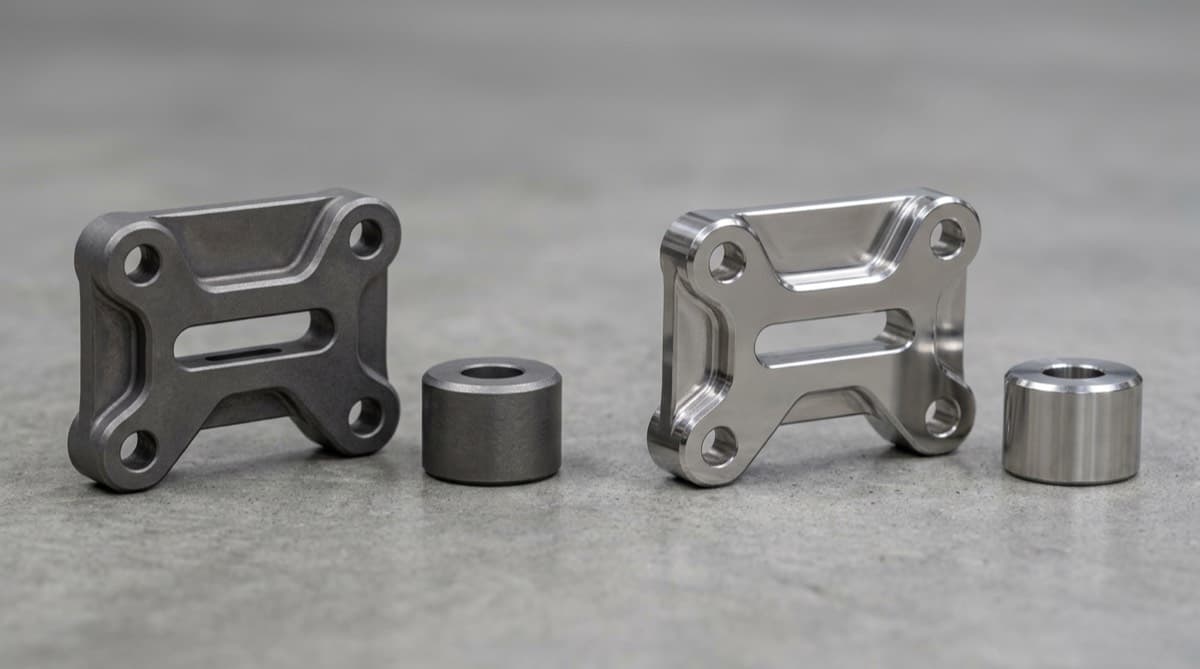
Corrosion Resistance: Titanium vs Stainless Steel
| Environment | Titanium | 316L Stainless |
|---|---|---|
| Seawater (immersion) | ✓ Immune — no chloride attack on TiO₂ | ⚠ Risk of crevice corrosion and pitting at crevices |
| Dilute HCl (< 5%) | ✓ Resistant (CP Grade 2 best) | ✗ Active corrosion — 316L unsuitable |
| Dilute H₂SO₄ (< 10%) | ✓ Resistant | ⚠ Marginal — requires inhibited acid |
| Nitric acid (fuming) | ✓ Excellent | ✓ Excellent |
| Phosphoric acid | ✓ Good (low concentration only) | ✓ Excellent |
| Body fluids / physiological | ✓ Excellent — implant grade | ✗ Not biocompatible for implants |
| Humid air / outdoor | ✓ Excellent | ✓ Excellent (passivated) |
| Chlorinated water (swimming pool) | ✓ Immune | ⚠ Risk of pitting at elevated temp |
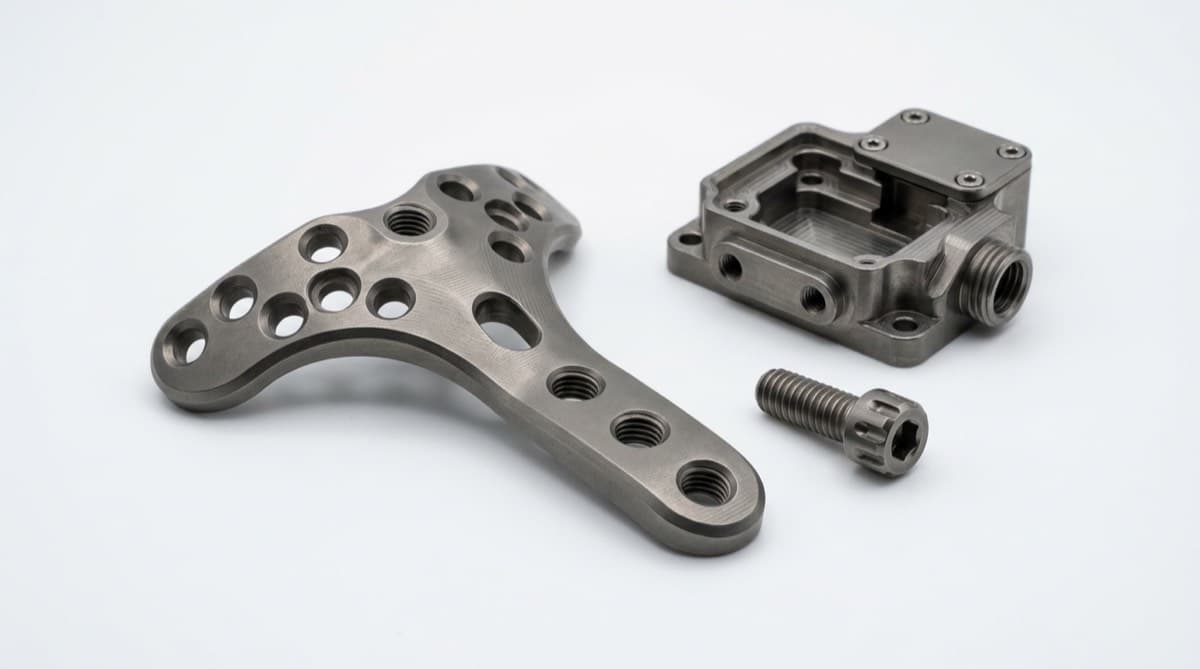
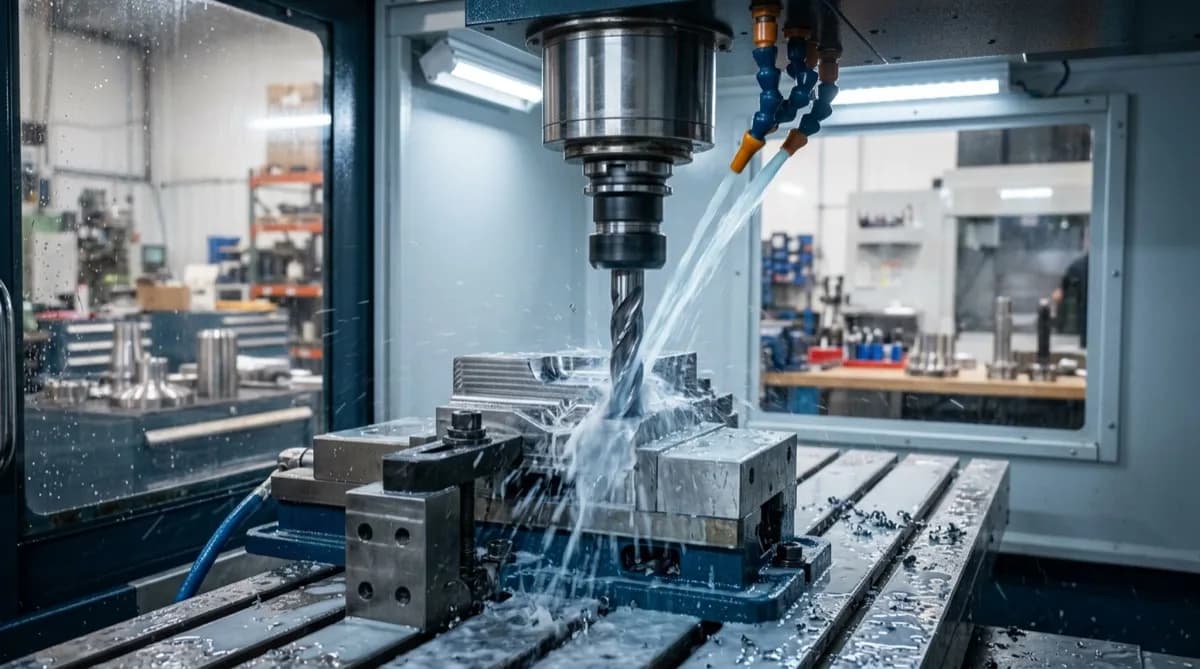
Titanium vs Stainless Steel: Machining Parameters
| Parameter | Ti-6Al-4V | 316L Stainless |
|---|---|---|
| Milling SFM | 80–150 (24–46 m/min) | 100–250 (30–76 m/min) |
| Turning SFM | 100–180 (30–55 m/min) | 120–300 (37–91 m/min) |
| Machinability rating | ~22% | ~40% |
| Work hardening tendency | High — rub causes surface hardening | High (austenitic SS work-hardens severely) |
| Coolant requirement | 500–1,000 psi (35–70 bar) flood (critical) | Standard flood recommended |
| Tooling | PVD TiAlN carbide | PVD TiAlN or AlTiN carbide |
| Relative cycle time | ~1.5–2× longer than 316L | Baseline (moderate difficulty) |
| Chip character | Stringy, continuous — manage evacuation | Stringy, work-hardening — similar challenge |
| Tapping difficulty | High — thread mill preferred | Moderate — thread mill recommended |
Cost: Titanium vs Stainless Steel CNC Parts
| Cost Factor | Ti-6Al-4V | 316L Stainless |
|---|---|---|
| Material (bar stock) | $15–30/lb ($33–66/kg) | $4–8/lb ($9–18/kg) |
| Relative machining time | 1.5–2× longer than 316L | 1× (baseline) |
| High-pressure coolant required | Yes (500–1,000 psi / 35–70 bar) | No (standard flood adequate) |
| Total part cost (relative) | 2–4× (similar geometry) | 1× (baseline) |
| Cost premium justified when | Weight savings, seawater immersion, biocompatibility | General corrosion resistance, strength, and cost balance |
Quote Ti-6Al-4V or 316L Stainless Parts
MakerStage sources CNC machined parts in Ti-6Al-4V, 316L, 304, and 17-4 PH stainless. Upload your STEP file for competitive material quotes typically within one business day.
Get a QuoteFrequently Asked Questions
Quote Parts in Titanium or Stainless Steel
Ti-6Al-4V, 316L, 304, or 17-4 PH — MakerStage sources CNC machined parts in any corrosion-resistant alloy from vetted shops. Get a competitive quote typically within one business day.
Get a Free Titanium Quote