Titanium vs Steel: Strength Comparison
Comparing titanium and steel on strength alone misses the key dimension: weight. The right question isn't “which is stronger?” — it's “which delivers more load capacity per pound?”
Key data: Ti-6Al-4V delivers 130 ksi (896 MPa) UTS at 0.160 lb/in³ (4.43 g/cm³) — comparable strength to 4140 steel, but 44% lighter. On specific strength, titanium beats many medium-strength steel conditions; ultra-high-strength steels can still rival or exceed it.
Short Answer
Titanium (Ti-6Al-4V) matches medium-strength steels (4140) in absolute strength but weighs 44% less — giving it higher specific strength. Choose titanium when weight is a design constraint. Choose high-strength steel (4340, 300M) when you need maximum absolute strength above 150 ksi (1,034 MPa) at lower cost.
- ✓ Weight is a design constraint (specific strength matters)
- ✓ 130 ksi (896 MPa) UTS is sufficient for the structural analysis
- ✓ Corrosion resistance is also required (saves a separate coating)
- ✓ Non-magnetic is required (titanium is non-ferromagnetic)
- ✓ Moderate temperature use to 600°F (315°C)
- ✓ UTS above 150 ksi (1,034 MPa) required (4340 HT, 300M, Aermet 100)
- ✓ Operating temperature above 600°F (315°C)
- ✓ Wear resistance is critical (hardened steel to 60+ HRC)
- ✓ Magnetic properties are required (ferromagnetic)
- ✓ Cost is primary — steel is 5–10× less expensive per part
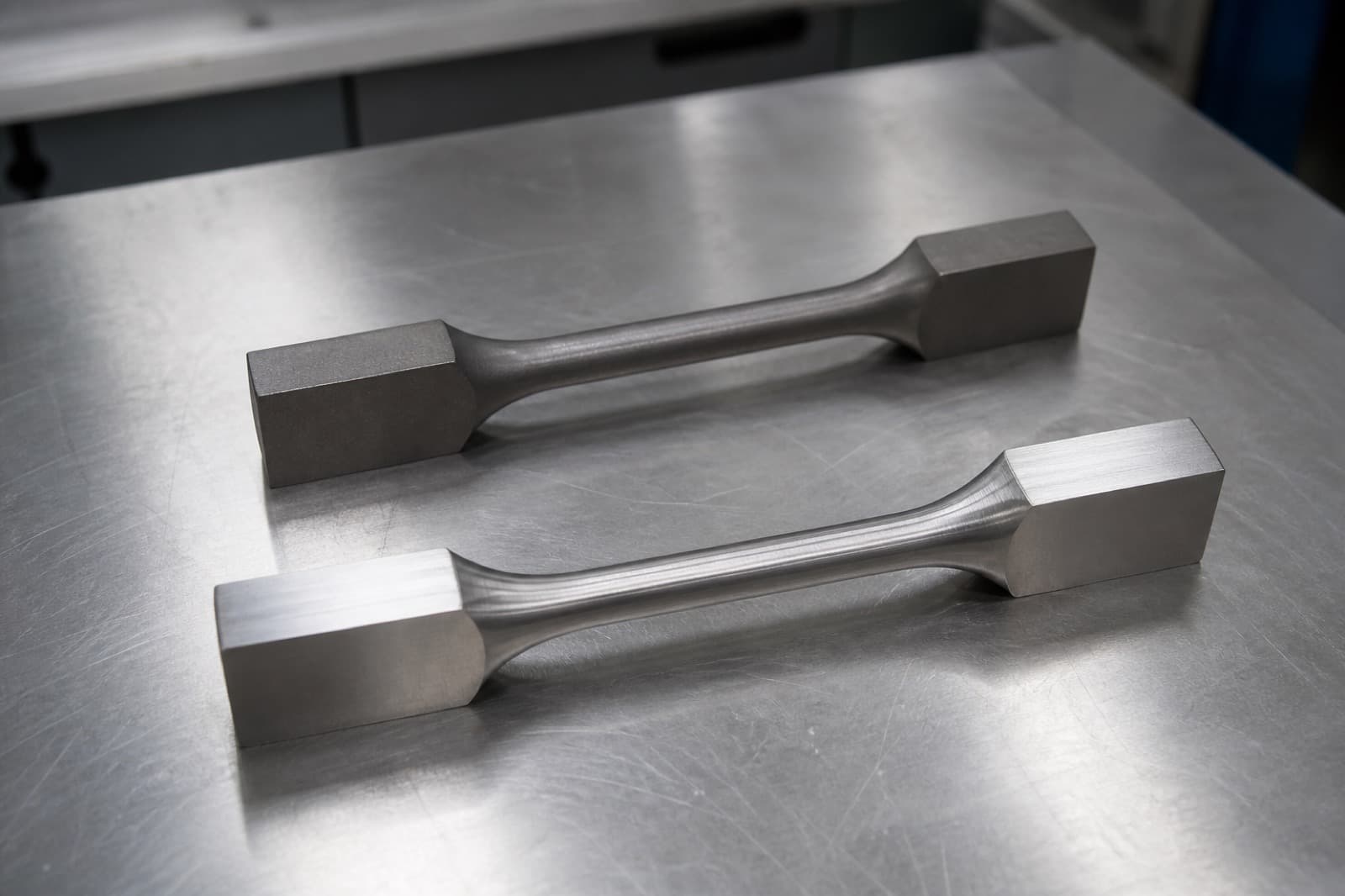
Understanding Strength: Absolute vs Specific
There are two ways to compare material strength: absolute strength (UTS in ksi or MPa) and specific strength (UTS divided by density). Absolute strength matters when cross-section is fixed. Specific strength matters when weight is a design constraint — as it is in medical, automotive, and high-performance applications.
When Absolute Strength Matters
Use absolute UTS when: the part has a fixed cross-section (cannot be redesigned), space is the constraint not weight, or you are comparing replacement-in-kind (same geometry).
Example: Ti-6Al-4V (130 ksi / 896 MPa) vs 4140 (125 ksi / 862 MPa) — effectively equal absolute strength in a given cross-section, but the titanium part weighs 44% less.
When Specific Strength Matters
Use specific strength when: the designer has freedom to modify cross-section, weight reduction is a primary objective, or the part is structural in a weight-critical system.
Example: Ti-6Al-4V (~813) vs 4140 (~441) — titanium can carry about 1.8× more ultimate tensile load per unit weight in a strength-limited design. Check stiffness separately because titanium deflects more than steel at the same geometry.
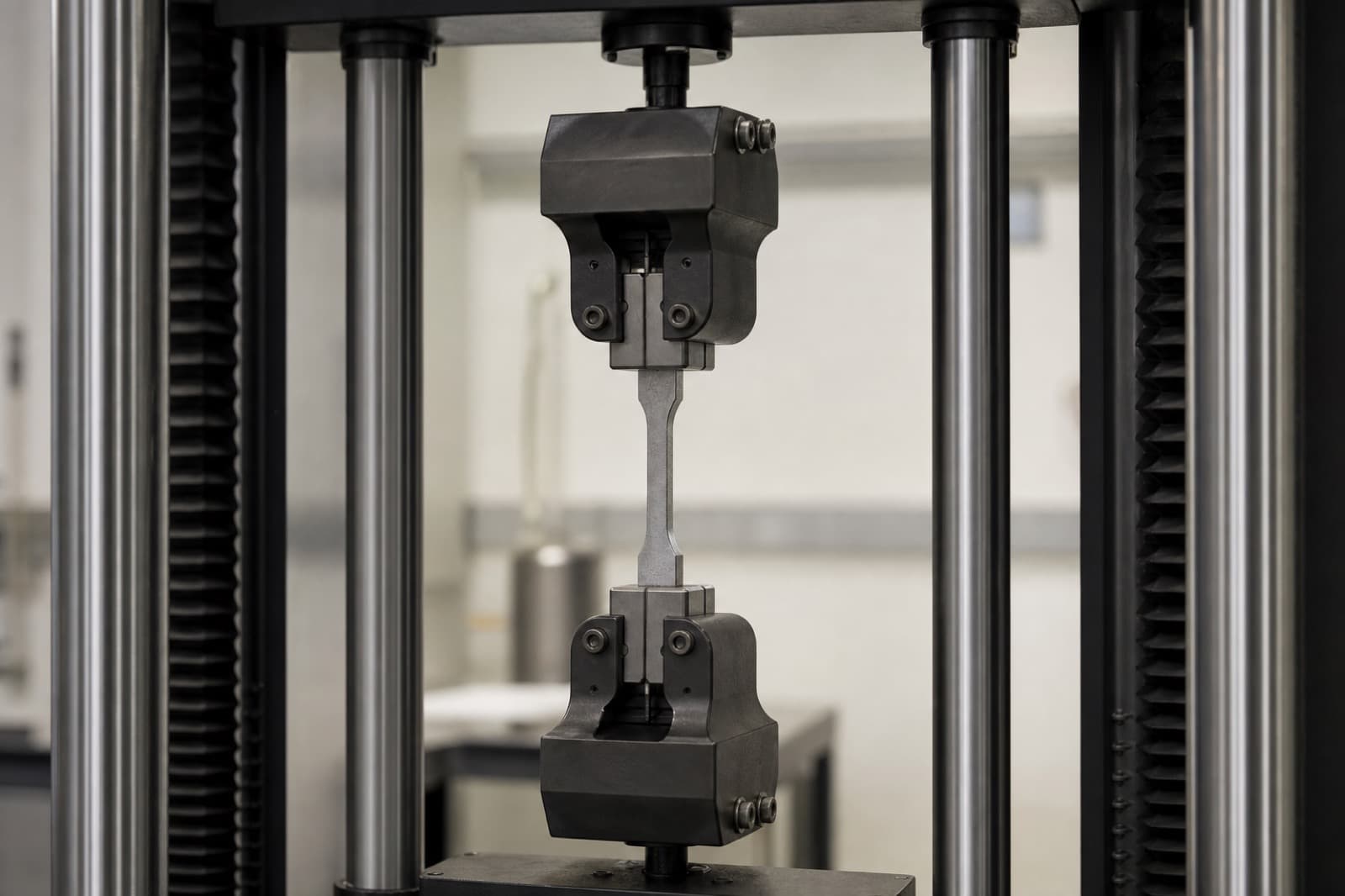
Titanium vs Steel: Strength Properties Table
| Alloy | Condition | UTS (ksi) | Yield (ksi) | Density (lb/in³) | Specific Strength (ksi·in³/lb) | Weight vs Ti |
|---|---|---|---|---|---|---|
| Ti-6Al-4V (Grade 5) | Annealed (AMS 4928) | 130 | 120 | 0.160 | 813 | Baseline |
| Ti-6Al-4V STA | Solution treat + age | 150–165 | 140–155 | 0.160 | 938–1,031 | Baseline |
| 4140 Steel | Q&T (180 ksi / 1,241 MPa temper) | 180 | 155 | 0.284 | 634 | +78% |
| 4340 Steel | Q&T (250 ksi / 1,724 MPa temper) | 250 | 225 | 0.283 | 883 | +77% |
| 300M Steel | Q&T | 280+ | 235+ | 0.284 | 986+ | +78% |
| 17-4 PH SS | H900 | 190 | 170 | 0.280 | 679 | +75% |
| Maraging 300 | Aged | 300 | 290 | 0.289 | 1,038 | +81% |
| Grade 5 Inconel 718 (ref) | Aged | 185 | 150 | 0.297 | 623 | +86% |
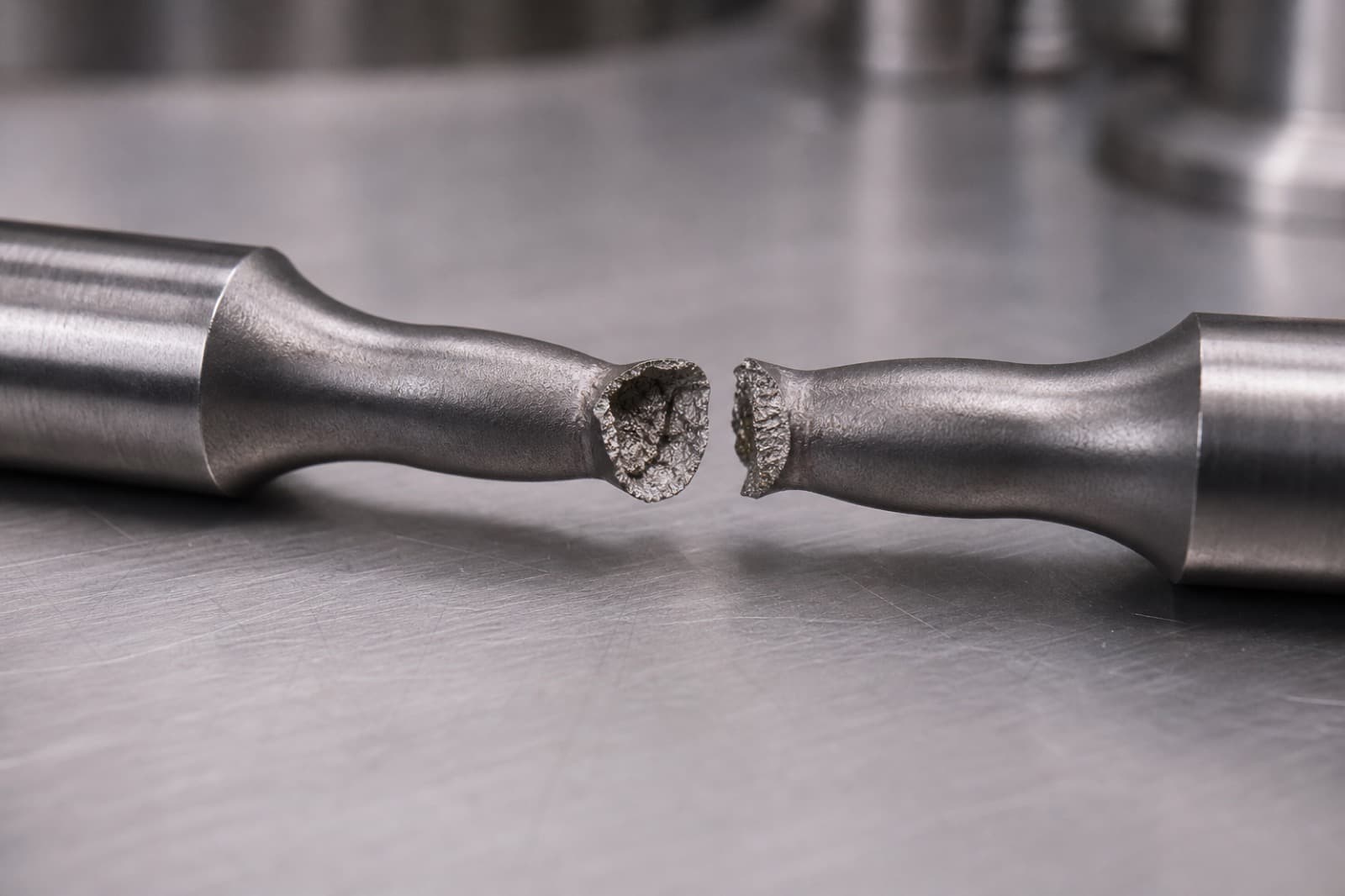
Specific Strength: Weight-Normalized Comparison
Specific strength = UTS ÷ density. It answers the question: “For a given weight budget, how much load can this material carry?” Titanium excels here because its density is about 44% less than steel, and its strength is comparable to many engineering steels.
Ti-6Al-4V vs 4140 Steel (125 ksi / 862 MPa condition)
Same absolute strength, titanium is 44% lighter. Choose titanium when weight matters.
Ti-6Al-4V vs 4340 (250 ksi / 1,724 MPa condition)
4340 at 250 ksi (1,724 MPa) has higher specific strength (~883) than annealed Ti-6Al-4V (~813) — one of the few steel conditions that rivals titanium per unit weight. Trade-off: 4340 weighs 77% more per unit volume.
Ti-6Al-4V STA vs 4340 (250 ksi / 1,724 MPa)
Ti-6Al-4V STA reduces the gap. For highest-performance structural applications, titanium STA competes on specific strength.
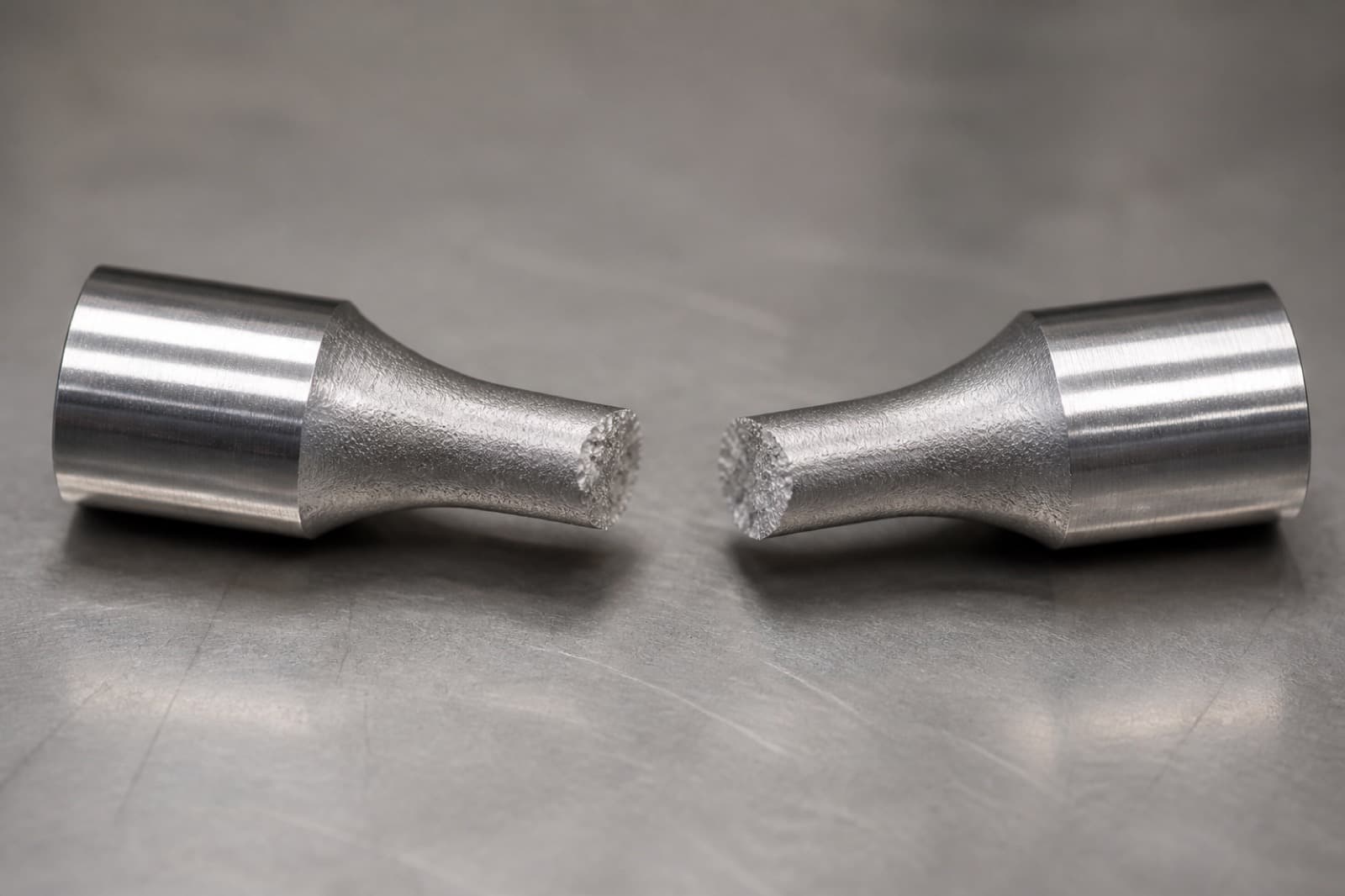
Fatigue Strength Comparison
Fatigue strength means the alternating stress a smooth test specimen survives for a specified number of cycles. The values below are approximate 10⁷-cycle comparison values, not universal design allowables; surface finish, notches, mean stress, heat treatment, and environment can move the usable number substantially.
| Alloy | Fatigue Strength at 10⁷ cycles | Fatigue Ratio (σa/UTS) | Notch Sensitivity |
|---|---|---|---|
| Ti-6Al-4V (Grade 5, annealed) | ~75 ksi (517 MPa) | ~0.58 | Moderate — Kf varies 1.5–2.5 |
| Ti-6Al-4V ELI (Grade 23) | ~90–95 ksi (621–655 MPa, smooth specimen) | ~0.75 | Moderate |
| 4140 Steel (Q&T, 125 ksi / 862 MPa) | ~55 ksi (379 MPa) | ~0.44 | High — steel notch-sensitive |
| 4340 Steel (Q&T, 180 ksi / 1,241 MPa) | ~90 ksi (621 MPa) | ~0.50 | High |
| 17-4 PH H900 | ~80 ksi (552 MPa) | ~0.42 | Moderate–High |
Titanium vs Steel: When to Choose Each
Choose Titanium (Ti-6Al-4V)
- Weight-critical structural parts where density reduction is the primary goal
- Structural components under fatigue loading where weight × cycles drives design
- Implantable medical devices (Grade 23 for load-bearing)
- Corrosive environments — seawater, body fluids, reducing acids
- Temperature range 300–600°F (149–315°C) where aluminum fails but steel is heavier than needed
- Applications where specific strength (load per pound) is the design driver
Choose Steel
- Ultra-high absolute strength needed (>150 ksi / 1,034 MPa) — 4340 HT, 300M, Aermet 100 exceed Ti-6Al-4V
- Temperature > 600°F (315°C) sustained — alloy steels maintain properties at higher temperatures
- Wear resistance critical — hardened steel (58–62 HRC) far exceeds titanium's hardness limit
- Cost is primary driver — heat-treated steel is 5–10× cheaper per machined part than titanium
- Magnetic properties required — titanium is non-magnetic
- Weld joint strength and efficiency — steel welds are more forgiving without inert shielding
Quote Parts in Titanium or Steel
MakerStage sources CNC machined parts in Ti-6Al-4V, 4140, 4340, 17-4 PH, and other alloys. Upload your STEP for competitive quotes with material comparison typically within one business day.
Get a QuoteFrequently Asked Questions
Quote Titanium or Steel Parts
Ti-6Al-4V, 4140, 4340, or 17-4 PH — MakerStage sources structural CNC parts from vetted shops with competitive pricing and material certification. Most quotes are returned within one business day.
Get a Free Titanium Quote