Data center hardware manufacturing
Data Center Sheet Metal Components
Data center sheet metal components need controlled bends, hardware, finishes, and datums. Plan a production-ready RFQ package with practical DFM.
How to use this guide
Use it with the data center sheet metal manufacturing page, review the relevant sheet metal capability, then prepare the controlled files and acceptance criteria before submitting an RFQ.
Start with the component family
The part type determines which dimensions will accumulate through cutting, bending, welding, and finishing.
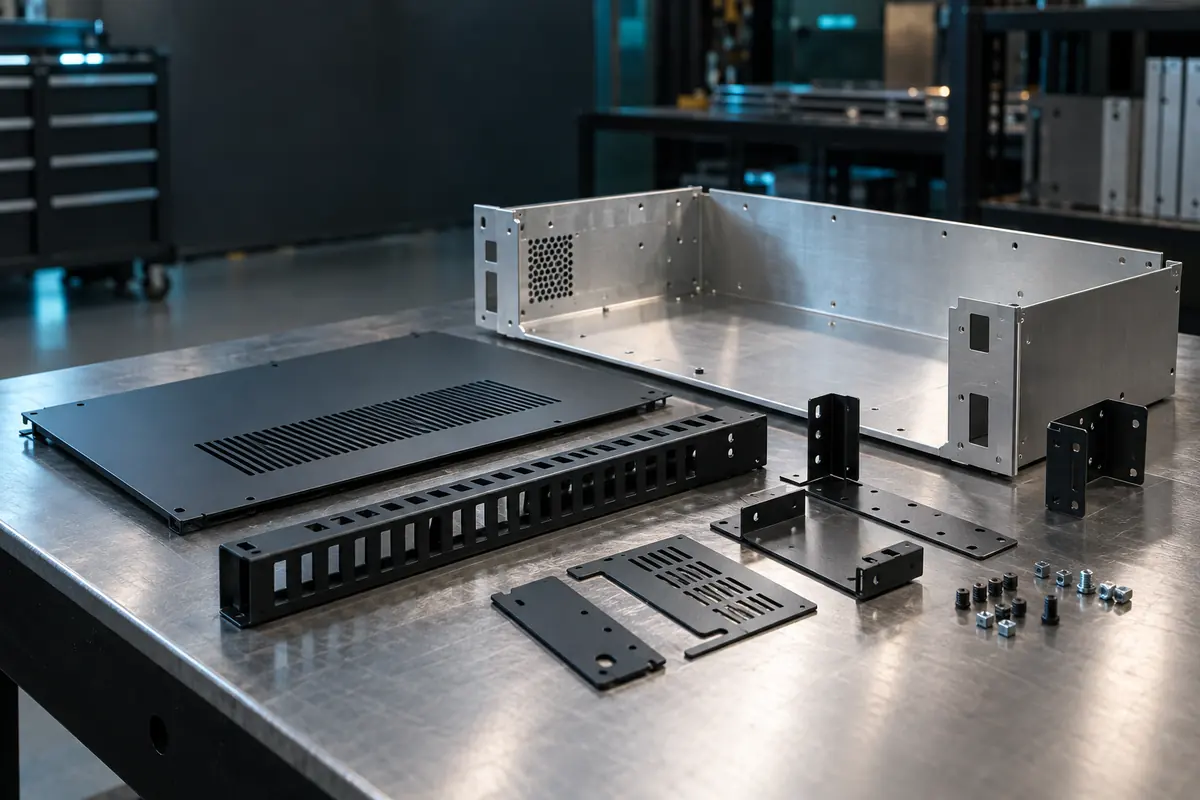
Data center hardware programs commonly need brackets, panels, trays, baffles, guards, and enclosure pieces. Their manufacturing risk is driven by the finished geometry rather than the flat outline alone.
A useful drawing identifies mounting faces, connector openings, airflow features, hardware locations, and the surfaces that must align with neighboring parts.
- Brackets and equipment supports
- Rack panels, trays, and baffles
- Covers, guards, and enclosure sections
- Mounting plates and cable-management hardware
Define the formed condition
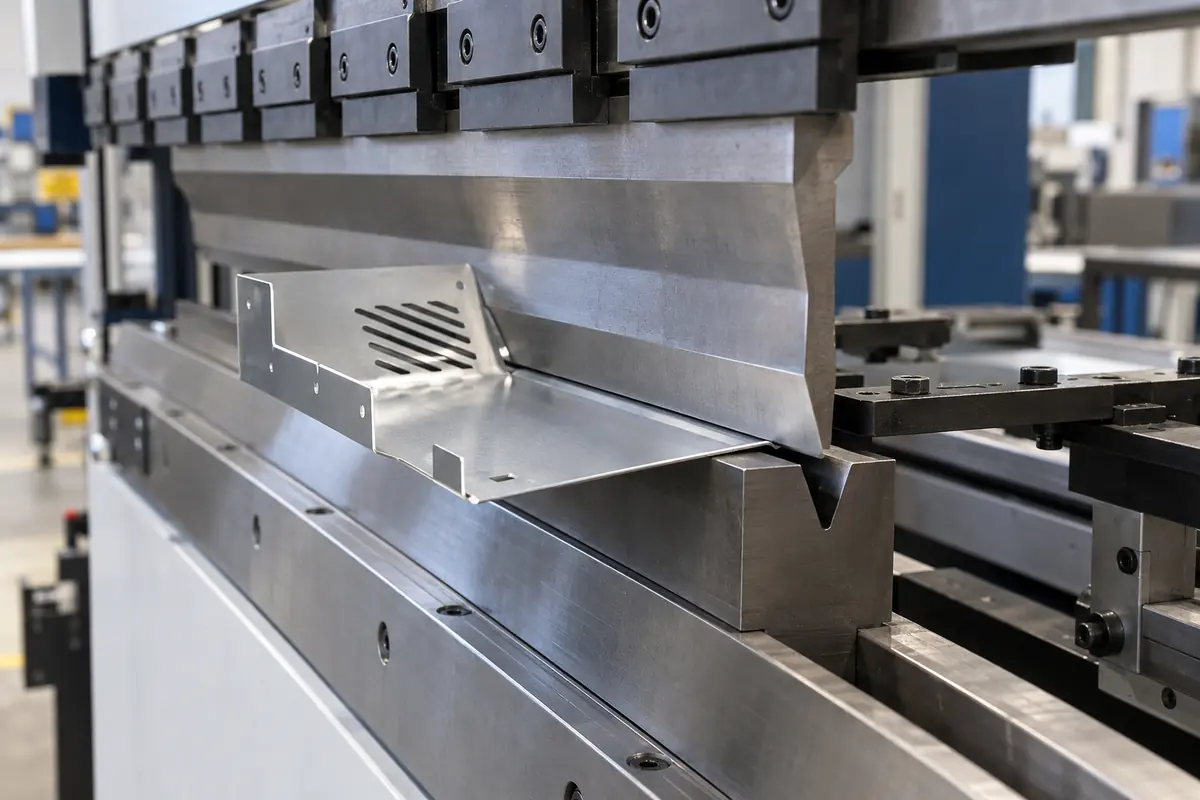
The released model and drawing should describe the part after bends, inserts, welds, and finish.
Call out material, thickness, bend radii, grain direction when relevant, hardware part numbers, weld symbols, finish, and inspection datums. Mark dimensions that control fit after all secondary operations.
If a hole or slot must align after forming, dimension it from a stable finished datum. Avoid making the supplier infer which flat-pattern feature controls assembly.
- Material grade and thickness
- Finished dimensions and datum scheme
- Hardware type, insertion side, and timing
- Finish and masked or protected areas
| Input | Why it matters |
|---|---|
| Finished datums | Keeps inspection tied to assembly fit |
| Bend and hardware details | Prevents avoidable supplier questions |
| Finish requirements | Clarifies final thickness and protected interfaces |
Build a quoteable supplier package
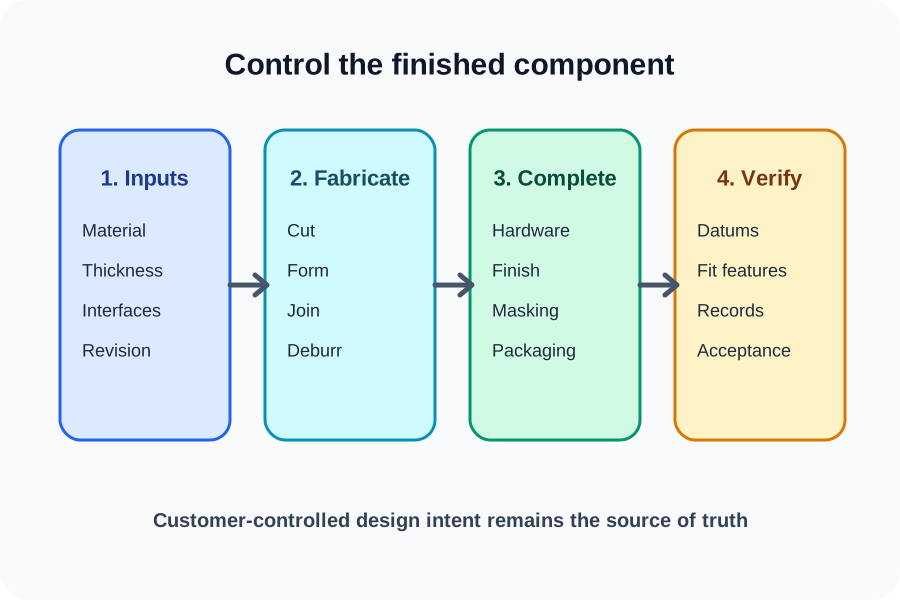
A complete package lets suppliers evaluate the same revision and scope.
Send the native or neutral 3D model with the controlled 2D drawing, quantity by build phase, target date, finish, and requested documentation. Include an assembly view when neighboring parts establish the critical fit.
MakerStage includes a free DFM review with each RFQ. Inspection reports, CMM reports, and material test reports can be requested when they are part of the quoted scope.
- STEP model and controlled PDF drawing
- Prototype and production quantities
- Revision and acceptance criteria
- Requested inspection and material records
Keep system requirements with the OEM
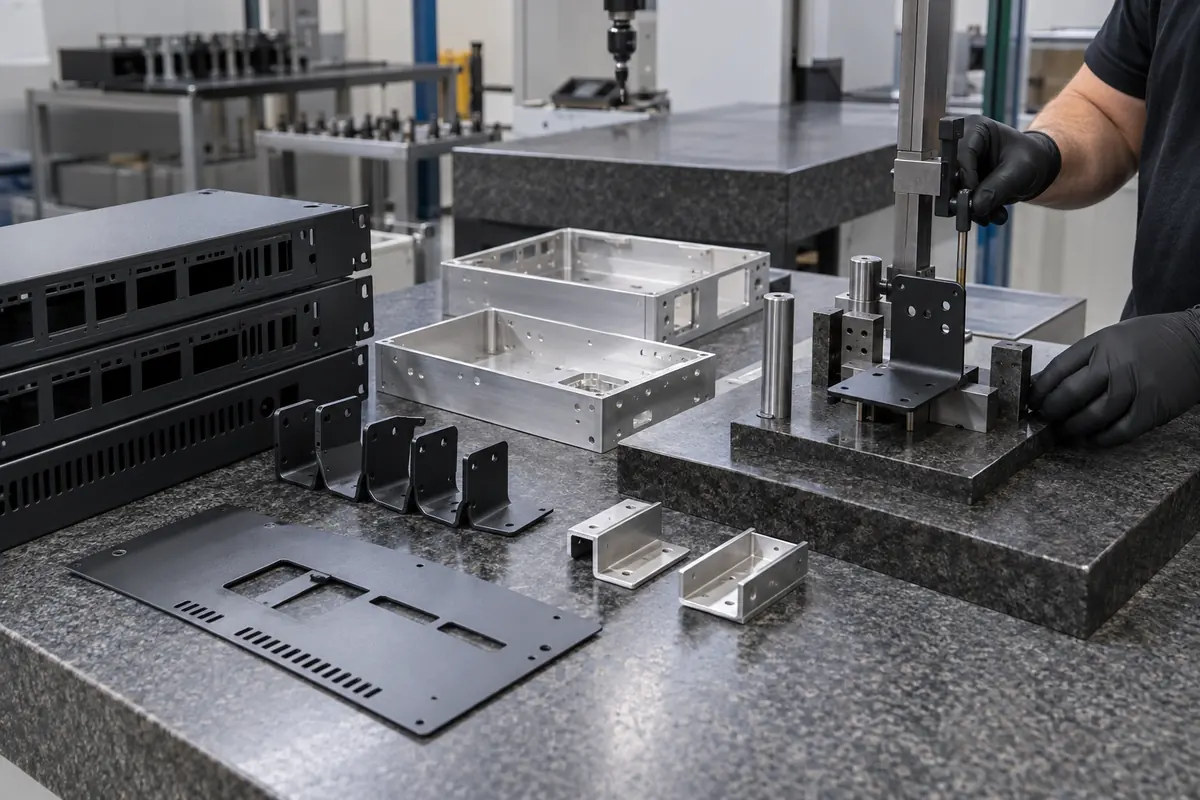
The hardware owner controls rack interfaces, airflow, loading, grounding, and certification requirements.
Manufacturing DFM can identify fabrication risks, but it does not establish thermal, structural, electrical, environmental, or rack-level performance. Those requirements belong in customer-controlled specifications.
When a program needs testing or certification, define the standard, acceptance method, responsible party, and required record before requesting a quote.
- Customer-defined rack and assembly interfaces
- Customer-defined thermal and airflow requirements
- Customer-defined test and certification scope
- Supplier feedback on manufacturability and inspection access
What MakerStage can quote responsibly
- Laser cutting, bending, and welding for customer-defined sheet metal parts
- Approved finishes when specified in the RFQ
- Inspection reports and material records on request
- No implied rack, thermal, EMI, NEMA, or system certification
Technical references
These primary references provide system context. Project requirements still belong in the customer-controlled drawing and specification.
Frequently Asked Questions
What files should I send for a data center sheet metal RFQ?
Can MakerStage manufacture a complete certified rack?
When should critical holes be machined after forming?
Bring a controlled component package
Upload the model, drawing, quantity, revision, and requested records. MakerStage will review manufacturability against the supplied scope.
Start an RFQ